The difference between a shallow well and a deep well involves much more than the number of feet drilled. Depth affects the type of groundwater the well reaches, the drilling equipment required, the pump system, the potential contamination risks, and the overall cost of the project.
In Southern Oregon and Northern California, we generally consider a well under 100 feet to be shallow. A deep well may extend from 100 feet to several hundred feet, with some wells exceeding 1,000 feet.
These measurements provide a useful starting point, but geology ultimately determines what counts as an adequate well. A 90-foot well in a productive gravel aquifer may provide more water than a 600-foot well drilled through solid, unfractured rock.
This is one of the most important lessons I have learned from working with water wells: depth alone does not determine whether a well will be successful. For all your well repairs and well drilling contact Enloe Drilling and Pumps today
What Is a Shallow Well?
A shallow well usually draws water from an unconfined aquifer located relatively close to the surface. In parts of Southern Oregon and Northern California, these aquifers may occur in layers of sand, gravel, clay, and other loose material deposited in valleys or near river systems.
Shallow wells are commonly found on valley floors and properties where groundwater sits relatively close to the surface. They can be quick and less expensive to construct when the geology and local regulations allow them.
However, their proximity to the surface can make them more sensitive to seasonal changes and contamination from activities above ground.
Common Characteristics of a Shallow Well
- Typically less than 100 feet deep
- Often draws water from sand, gravel, or shallow fractured formations
- May be more affordable to drill and equip
- Can sometimes be completed more quickly
- May experience greater seasonal water-level changes
- Usually faces a higher risk from surface contamination
- May use a jet pump or subCycling pump, depending on the pumping water level and system design
It is important to distinguish between total well depth and the distance from the pump to the water. A well can be deeper than 25 feet and still use a shallow-well jet pump if the pumping water level remains within the pump’s suction limit. Pump selection must be based on the actual water level and required performance, not only the depth printed on the well log.
Read our latest blog post: What Happens If My Well Runs Dry?
What Is a Deep Well?
A deep well extends farther through soil, rock, and geological formations to reach groundwater at greater depth. In the foothills, mountains, and bedrock areas of Southern Oregon and Northern California, drillers may need to penetrate hundreds of feet of rock before intersecting a productive water cárrying fracture.
Deep wells normally use submersible pumps installed below the water level inside the casing. Instead of attempting to pull water upward through suction, the submersible pump pushes it to the surface.
Deeper wells are often better protected from immediate surface contamination, but that does not make them automatically safe. They can contain naturally occurring arsenic, iron, manganese, hardness, sulfur, and other minerals. Every new well should be tested before the water is used for drinking.
Common Characteristics of a Deep Well
- Typically more than 100 feet deep
- May extend several hundred feet or more in difficult terrain
- Often reaches fractured bedrock or deeper aquifers
- Usually requires a submersible pump
- Costs more to drill, case, equip, and power
- May offer better protection from surface contamination
- Can have higher concentrations of naturally occurring minerals
- Is not guaranteed to produce more water than a shallow well
How Southern Oregon and Northern California Geology Affects Well Depth
There is no universal drilling depth that works throughout Southern Oregon and Northern California. The geology changes considerably between valley floors, volcanic areas, foothills, mountains, and rural plateaus.
Groundwater is not necessarily stored in a large underground lake. In many bedrock areas, it moves through cracks, faults, joints, and weathered zones. A driller must intersect enough of these water-bearing openings to develop a useful supply.
Shallow Valley Aquifers
Valleys near the Rogue River, Klamath River, and other drainage systems may contain layers of alluvial sand and gravel. These loose materials can store and transmit significant quantities of groundwater.
A productive well in this environment may be relatively shallow. However, a shallow unconfined aquifer can respond quickly to drought, pumping by neighboring properties, surface runoff, agricultural activity, and seasonal rainfall.
Fractured Basalt and Granite
On foothills, ridges, and mountainous properties, drilling conditions can be very different. Thin surface soil may be followed by dense basalt, granite, or other hard formations.
The rock itself may store very little usable water unless it contains fractures. One borehole might intersect a productive fracture at 150 feet, while another borehole nearby may pass through hundreds of feet of comparatively dry rock.
This variability is why drilling beside a successful neighboring well does not guarantee the same result.
Elevation Differences
Property elevation also matters. If one home sits on a valley floor and another sits 200 feet higher on an adjacent ridge, their wells may need substantially different depths even if both eventually reach groundwater at a similar elevation.
We use neighboring well information as evidence, not as a promise. The surface elevation and geology beneath each proposed drilling location still need to be considered.
Advantages and Disadvantages of a Shallow Well
A shallow well can be an excellent solution when it is properly constructed in a productive, protected aquifer. It should not automatically be treated as an inferior option simply to deep drilling.
Advantages of a Shallow Well
- Lower drilling costs when fewer feet and less casing are required
- Shorter drilling and installation time in suitable ground conditions
- Easier access to some components for inspection or repair
- Lower pumping lift, which may reduce the pump size and energy required
- Potentially lower concentrations of certain naturally occurring minerals
Disadvantages of a Shallow Well
- Greater vulnerability to drought and seasonal water-table changes
- Higher risk from septic systems, livestock, fertilizer, pesticides, and runoff
- Greater likelihood of bacteria entering through surface pathways
- Possible sand and sediment problems
- Lower available storage in the well casing
- Potentially limited capacity during periods of high household or agricultural demand
Shallow water does not always have lower mineral content, and it is not always contaminated. The actual outcome depends on the aquifer and surrounding property. Water testing remains essential.
Advantages and Disadvantages of a Deep Well
Deep wells are often chosen because productive groundwater cannot be reached at a shallower depth. They may provide greater long-term reliability, but deeper drilling comes with additional cost and uncertainty.
Advantages of a Deep Well
- Often less affected by short-term surface-water changes
- Usually be better? No. It may be better protected from bacteria and immediate surface runoff when properly sealed
- Provides additional water storage inside the casing
- May reach water-bearing bedrock fractures unavailable to shallow wells
- Can support a durable submersible pump system designed for the property’s demand
Disadvantages of a Deep Well
- Higher drilling, casing, pump, cable, and installation costs
- More time and equipment required to complete the work
- Potentially higher energy use because the pump must overcome greater lift
- More complex pump removal and repair
- Possible hardness, iron, manganese, arsenic, sulfur, or other mineral issues
- No guarantee of a high flow rate
A deep well is also not completely drought-resistant. Prolonged drought, regional pumping, and changes in groundwater recharge can affect both shallow and deep aquifers.
Does a Deeper Well Produce Better Water?
Not necessarily. A deeper well may be better isolated from surface contamination, but it can encounter different water-quality problems.
Water moving through deeper rock formations may dissolve minerals over time. Depending on the geology, the water may contain:
- Arsenic
- Iron
- Manganese
- Calcium and magnesium hardness
- Sulfur compounds
- Elevated total dissolved solids
None of these outcomes can be confirmed by depth alone. The water must be analyzed by an accredited laboratory.
I advise owners to test a new well before drinking the water or purchasing treatment equipment. Installing a softener, iron filter, or reverse-osmosis system without laboratory results often leads to wasted money and poor treatment performance.
Does a Deeper Well Produce More Water?
A deeper well does not automatically have a higher yield. Yield depends on the aquifer or water-bearing fractures intersected during drilling.
A shallow gravel aquifer can produce a strong flow. A deep bedrock well may produce only a few gallons per minute, or less, if it encounters narrow or poorly connected fractures.
Going deeper can sometimes intersect additional water-bearing zones and improve the yield. It can also add storage within the well. However, drilling deeper through solid dry rock may add cost without adding meaningful water.
The decision to continue drilling must be based on the formations encountered, water entries observed, measured flow, intended demand, budget, and professional judgment.
How We Estimate the Required Well Depth
Before a drilling rig arrives, we gather as much information as possible about the property. This helps us develop a realistic estimate, but it cannot remove all underground uncertainty.
1. We Review Nearby Well Logs
Well logs contain useful information from previously drilled wells. Depending on the report, they may show:
- Total well depth
- Depth of casing
- Geological formations encountered
- Static water level
- Estimated or tested yield
- Construction details
- The date the well was completed
A group of surrounding logs can reveal a general pattern. One neighboring log on its own is not enough to predict the outcome confidently.
2. We Consider the Property’s Elevation
Depth must be understood in relation to surface elevation. A well on a ridge may need to travel much farther than a well on lower ground to reach the same approximate groundwater elevation.
Even then, the underground formations may slope, fold, fracture, or terminate between the two properties.
3. We Assess the Geology
Geological maps and local drilling history help us anticipate whether we are likely to encounter clay, sand, gravel, basalt, granite, or another formation.
This affects the drilling method, anticipated drilling speed, casing requirements, and possible groundwater conditions.
4. We Calculate the Property’s Water Demand
A domestic household, livestock operation, irrigation system, commercial property, and municipal project have very different water requirements.
A lower-yield well may still support a home when it has adequate storage and a properly designed pump system. The same well may be completely unsuitable for high-volume irrigation.
We consider both the daily volume required and peak demand. Peak demand occurs when several fixtures, appliances, or irrigation zones operate at the same time.
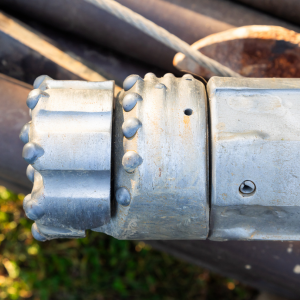
What Happens During Drilling?
Once drilling begins, physical evidence from the borehole becomes more valuable than the original estimate.
Changes in Drill Cuttings
The material brought to the surface helps identify the formations being drilled. Changes in color, texture, grain size, moisture, and rock type can show that the drill is entering a different geological zone.
Changes in Rig Performance
An experienced driller monitors penetration rate, air pressure, cuttings, vibration, and other signs from the drilling equipment. A sudden change may indicate a fracture, cavity, softer formation, or water-bearing zone.
Water Entries and Estimated Flow
During air-rotary drilling, compressed air brings cuttings and groundwater to the surface. This allows the crew to observe new water entries and estimate the developing flow.
If the first water-bearing fracture produces too little water for the intended use, the owner and driller must decide whether continuing deeper is justified.
Why Yield Testing Is More Important Than Depth Alone
A yield test helps establish whether a completed well can provide water at a sustainable rate. The test measures how the water level responds while the well is pumped.
Important measurements include:
- The static water level before pumping
- The pumping rate in gallons per minute
- The drop in water level during pumping
- Whether the water level stabilizes
- How quickly the well recovers after pumping stops
If the water level continues to fall while pumping, water is being removed faster than the well is recovering. The solution may involve a lower pumping rate, additional well storage, a storage tank, pump protection, further drilling, or a different water source.
A single estimated flow observed while drilling is useful, but it is not always a substitute for a properly conducted pumping or yield test.
Why Your Well May Be Different From Your Neighbor’s
Imagine two properties located only a few hundred feet apart in the Jackson County foothills.
The first property sits closer to the valley floor. The drilling rig passes through alluvial soil and gravel before entering fractured basalt. A productive fracture is encountered at approximately 140 feet, resulting in a strong estimated yield.
The second property sits farther up the slope. The rig reaches solid basalt after a thin layer of surface material. It misses the fracture supplying the first property and continues through comparatively dry rock. A smaller water-bearing fracture is eventually encountered several hundred feet deeper.
This is an illustrative example of a situation drillers commonly face in fractured-rock terrain. It demonstrates several practical realities:
- Short horizontal distances can conceal major geological changes.
- A small elevation difference can add substantially to the required depth.
- A deeper well can produce less water than a shallower neighboring well.
- A neighboring well log is evidence, not a drilling guarantee.
- The pump and storage system must be designed around the actual result.
Homeowners should not build a final budget around the best nearby well. It is safer to consider the range of outcomes shown by several local well logs.
How Well Depth Affects the Pump System
Pump selection depends on more than total well depth. We consider the static water level, pumping water level, flow rate, required pressure, pipe length, elevation to the building, and peak water demand.
Shallow-Well Jet Pumps
A shallow-well jet pump is installed above ground and uses suction to lift water. Atmospheric pressure limits practical suction lift, so these pumps are generally suitable only when the pumping water level remains within roughly 25 feet of the pump under ideal conditions.
If the water level falls beyond the pump’s capability, it may lose prime, deliver poor pressure, or stop supplying water.
Deep-Well Jet Pumps
Some wells use deep-well jet pump systems with components installed in the well. These can lift water from greater depths than a basic shallow-well jet pump, although submersible pumps are common in modern drilled wells.
Submersible Pumps
A submersible pump operates below the water level and pushes water upward. It must be sized to accommodate the total dynamic head, well yield, required flow, and pressure.
A larger motor is not automatically better. An oversized pump can withdraw water faster than the well recovers, causing low-water conditions, pump cycling, sediment movement, and possible equipment damage.
Signs That a Shallow Well May No Longer Be Adequate
A shallow well does not always fail without warning. Changes in performance can indicate a declining water level, mechanical failure, damaged construction, or reduced aquifer recharge.
Warning signs include:
- Faucets sputtering or releasing air
- Water pressure falling during normal household use
- The supply taking hours to recover after laundry, bathing, or irrigation
- A pump losing prime repeatedly
- Cloudy, muddy, or sandy water
- A sudden increase in sediment
- A pump running continuously
- Changes in taste, odor, or color
- Repeated positive bacteria tests after heavy rain
- The well failing during late summer or drought
These signs do not prove that the well must be deepened. A failed pressure tank, clogged screen, plumbing leak, worn pump, damaged drop pipe, or faulty control can create similar symptoms.
What Should Be Tested Before Deepening or Replacing a Well?
Do not hire a drilling rig before establishing what is actually wrong. A few targeted diagnostic steps can prevent an unnecessary drilling project.
Review the Existing Well Log
The original well report provides a starting point. It may show the completed depth, formations, casing, water-bearing zones, original static level, and reported yield.
Comparing the original figures with current measurements helps determine what has changed.
Inspect the Pump and Pressure System
Low pressure is often blamed on the well when the actual problem is a worn pump, failed pressure tank, clogged filter, leaking pipe, damaged check valve, or faulty pressure switch.
The mechanical system should be evaluated before concluding that the aquifer has failed.
Measure Static and Pumping Water Levels
The static level shows where the water rests before pumping. The pumping level shows how far it falls while water is being withdrawn.
These measurements help distinguish between a well-yield problem and a pump-system problem.
Conduct a Yield Test
A controlled pumping test measures flow, drawdown, and recovery. It shows whether the well can sustainably meet the property’s demand.
Complete a Water-Quality Test
Test for bacteria, nitrates, arsenic, and other locally relevant contaminants. If the problem involves sediment, staining, odor, or corrosion, include the minerals and general chemistry needed to diagnose it.
Consider a Downhole Camera Inspection
A well camera may reveal damaged casing, obstructions, mineral buildup, corrosion, or other visible problems. Camera inspection is not suitable or necessary in every well, but it can provide valuable evidence when the well’s physical condition is uncertain.
Should You Repair, Deepen, or Drill a New Well?
The correct decision depends on the condition of the existing well and the reason it is underperforming.
Repair the Existing Well When the Aquifer Is Still Adequate
Repair or rehabilitation may be the best option when testing confirms that the aquifer can still provide enough water and the problem involves:
- A worn or incorrectly sized pump
- A failed pressure tank or control
- Damaged wellhead components
- A repairable section of casing
- A clogged screen or mineral buildup
- Leaking drop pipe
- An unsuitable system design
Deepen the Existing Well When Conditions Allow
Deepening may be considered when the existing well is structurally suitable and deeper geological information suggests a reasonable opportunity to encounter additional water.
However, not every well can be deepened safely or economically. The casing size, construction method, existing depth, condition, obstructions, and geology all matter.
There is also a risk that additional drilling will not improve the yield or may encounter water with different chemistry.
Drill a New Well When the Existing One Is Unsuitable
A new well may be the better long-term investment when the existing well is badly deteriorated, poorly located, contaminated through an uncorrectable pathway, too narrow for the required equipment, or constructed in a way that makes deepening impractical.
A different drilling location may also provide a better setback from septic systems, livestock areas, flood zones, or other contamination risks.
How to Budget for Uncertain Drilling Depth
A well estimate cannot guarantee the final depth because nobody can inspect every underground fracture before drilling. Property owners should budget for a realistic range rather than one best-case number.
Your budget should consider:
- Mobilization and site access
- Drilling cost per foot
- Casing and sealing requirements
- Potentially difficult rock formations
- Additional depth if the expected zone is dry
- The pump and motor
- Drop pipe and electrical cable
- Pressure tank and controls
- Trenching and connection to the property
- Water-quality testing
- Possible treatment equipment
- Storage tanks or low-yield management systems
- Permit and regulatory costs
I do not advise homeowners to assume that their final cost will match the shallowest or least expensive well nearby. Review several surrounding well logs and keep a contingency amount available for additional drilling and equipment.
The deepest possible outcome is not always the most likely one, but the financial plan should leave room for geology to differ from the initial estimate.
Common Myths About Shallow and Deep Wells
Myth 1: A Deeper Well Always Has Cleaner Water
A deeper well may have better protection from surface bacteria and runoff, but it can contain naturally occurring arsenic, iron, manganese, hardness, sulfur, or other dissolved minerals.
Only laboratory testing can establish the water quality.
Myth 2: A Deep Well Cannot Be Affected by Drought
Deeper wells may be less sensitive to short-term seasonal changes, but they are not completely drought-proof. Prolonged dry conditions and increased regional pumping can affect deeper groundwater systems.
Myth 3: Drilling Deeper Guarantees More Water
A productive fracture may be encountered at 150 feet, 600 feet, or not at all in a particular borehole. More depth can improve the opportunity to encounter additional water-bearing zones, but it cannot guarantee them.
Myth 4: A Deep Well Automatically Creates Better Water Pressure
Household pressure is created and controlled by the pump, pressure tank, controls, pipework, elevation, and system design. It is not created simply by making the well deeper.
Myth 5: A Shallow Well Is Always a Bad Well
A properly constructed shallow well in a productive aquifer can provide reliable water. It must be protected from surface contamination, monitored for seasonal changes, and tested regularly.
Myth 6: My Well Will Match My Neighbor’s Well
Nearby wells provide valuable information, but underground formations do not follow property boundaries. Two wells a short distance apart can have different depths, yields, water levels, and water quality.
Which Well Is Better for Your Property?
Neither shallow nor deep is automatically better. The best well is one that safely and sustainably meets the property’s water demand.
A successful well should:
- Reach a dependable groundwater source
- Provide an adequate sustainable yield
- Be protected from contamination
- Comply with state and county requirements
- Use a correctly sized pump system
- Deliver suitable pressure and storage
- Produce water that has been tested
- Remain practical to maintain and repair
The decision should be based on the property’s geology, elevation, surrounding well records, intended water use, available budget, and what the drilling process reveals.
Professional Water Well Drilling in Southern Oregon and Northern California
Enloe Drilling and Pumps is a multigenerational, family-owned well drilling and pump company with a history extending back to 1913. We understand that drilling in Southern Oregon and Northern California requires regional experience, careful planning, and honest communication about underground uncertainty.
We provide water well drilling, pump installation, pump repair, well testing support, yield testing, and water-system services for residential, agricultural, and commercial properties.
Whether you are evaluating an existing shallow well, considering deepening, or planning a completely new well, the first step is to gather reliable information. Review the well records, inspect the equipment, measure performance, test the water, and assess the local geology before committing to a major project.
Contact Enloe Drilling and Pumps for professional assistance with water well drilling and pump installations in Southern Oregon and Northern California.