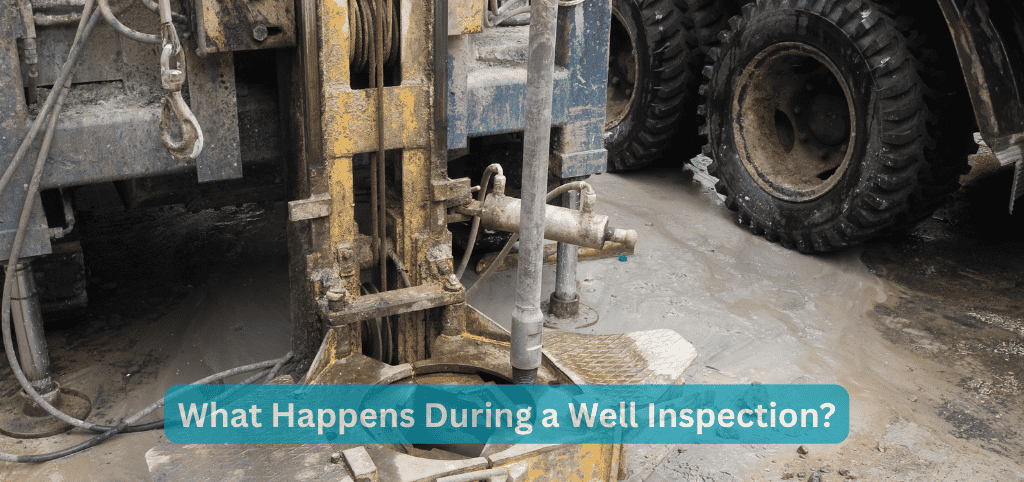
A professional well inspection assesses the condition and performance of your water system. Depending on the agreed scope, it can include checks of the visible wellhead, pump controls, pressure tank, water delivery, and laboratory water testing.
At Enloe Drilling & Pumps Inc., our approach is to look beyond whether water comes out of the faucet. A system can still deliver water while a pressure tank is failing, electrical components are deteriorating, or the wellhead needs attention.
Our advice is to confirm exactly what your inspection includes before booking. A mechanical inspection, a pumping test, and laboratory water analysis answer different questions. You should not assume that ordering one automatically includes the others. For all your well drilling needs contact us
The Inspection Starts With Your Well’s History
Before testing equipment, the technician needs to understand the system and why you requested the visit. An inspection for recurring pressure loss may require a different approach from an assessment for a property purchase.
Useful background information includes:
- When the well was drilled.
- The well’s recorded depth and construction details.
- The age of the pump and pressure tank.
- Previous pumping tests and water-quality results.
- Recent repairs or changes in water use.
- Any history of flooding, wildfire damage, or seasonal shortages.
Describe symptoms as specifically as possible. “The pressure drops after two loads of laundry” gives the technician more useful information than “The water system is unreliable.”
The Technician Checks the Visible Wellhead
The surface inspection focuses on the accessible wellhead and its surroundings. The technician looks for damage and conditions that could allow contamination or interfere with servicing.
Checks may include:
- The condition and fit of the well cap.
- Visible casing damage or corrosion.
- Vent screens and accessible openings.
- Casing height relative to the surrounding ground.
- Drainage and evidence of standing water.
- Nearby potential contamination sources.
- Signs of damage from vehicles, animals, flooding, or fire.
A Surface Inspection Has Limits
A technician cannot confirm every underground construction detail by looking at the wellhead. Buried seals, deep casing, and the condition of the borehole may require records, additional testing, or specialized investigation.
The visible casing and drainage should be assessed against the requirements applicable to that well. Avoid assuming that one construction measurement applies to every property in Oregon and California.
Read our latest blog post: How to Choose Between Well Drilling Companies
The Pump Controls and Pressure Tank Are Assessed
The next stage commonly involves the accessible mechanical and electrical equipment. The technician observes how the system builds pressure, starts, stops, and responds when water is used.
Depending on the equipment and inspection scope, this can involve checking:
- Pressure-switch operation and settings.
- Pressure-gauge behavior.
- Pump cycling frequency.
- Pressure-tank condition and usable drawdown volume.
- Accessible control-box components.
- Voltage, current, and other appropriate electrical measurements.
- Visible leaks and damaged connections.
Electrical readings need context. A current measurement alone does not prove that a motor is failing. The technician should interpret it alongside the equipment specifications, voltage, operating conditions, and other findings.
Why a Waterlogged Pressure Tank Matters
A pressure tank provides a cushion of compressed air that helps maintain pressure and reduces frequent pump starts. If that function is lost, the pump may cycle rapidly.
Consider an illustrative example: a homeowner opens a faucet and sees normal water flow, but the pressure gauge drops quickly, the pump starts, pressure rises, and the pump stops. The sequence then repeats every few seconds.
The homeowner may not notice a problem because water still reaches the tap. However, this short-cycling deserves investigation. Possible causes include a failed tank bladder, incorrect air charge, pressure-control problems, or leaks.
If the tank has failed, replacing it can help protect the pump from excessive cycling. The urgency depends on the actual findings, rather than a prediction that every affected pump will fail within a fixed number of days.
Water Delivery May Be Tested
A flow check measures how much water the system delivers. A more detailed pumping test also observes water levels and recovery to assess the well’s behavior under sustained use.
Ask whether your inspection includes a basic delivery check or a dedicated well-production test. These are not interchangeable.
What a Pumping Test Measures
Where access and equipment allow, a pumping assessment may record:
- The resting water level before pumping.
- The discharge rate in gallons per minute.
- How far the water level falls during pumping.
- Whether the water level continues falling or begins to stabilize.
- How the water level recovers after pumping stops.
A short flow check can be influenced by water already stored in the well. It may show strong delivery without establishing that the surrounding formation can replenish water at the same rate for prolonged use.
The appropriate test duration depends on the purpose, well conditions, and any transaction requirements. Confirm the procedure before booking rather than assuming every inspection includes a two-to-four-hour test.
Water Samples Are Collected When Testing Is Included
Mechanical performance does not establish drinking-water safety. Clear water with good pressure can still contain contaminants that require laboratory analysis to detect.
If sampling is included, the collector follows the laboratory’s instructions for containers, sample location, handling, and delivery. The sampling point depends on what the test is intended to assess.
Confirm Which Contaminants Will Be Tested
A water test only provides results for the substances included in the requested panel. Ask for the list before sampling.
Testing may include bacteria, nitrate, arsenic, or other contaminants selected according to local risks, previous results, and the purpose of the inspection.
In Oregon, domestic-well testing associated with a property sale includes arsenic, nitrate, and total coliform bacteria under the state’s real estate testing requirements. That water-quality requirement should not be confused with a complete mechanical inspection or pumping test.
Additional chemical testing should be discussed when there is a relevant concern, such as wildfire damage, nearby chemical use, or a history of contamination.
Some Services Require a Separate Appointment or Quote
A standard visit cannot answer every possible question about a well. Confirm the included services and exclusions in writing.
Additional work may include:
- An extended pumping test.
- Specialized laboratory panels.
- A down-hole camera investigation.
- Pulling the pump for physical inspection.
- Repairs to piping, controls, or the pressure tank.
- Well disinfection and follow-up sampling.
- Further investigation of construction defects.
Ask whether these services are available directly or require another specialist. An inspection identifies concerns; it does not necessarily include the work needed to correct them.
Home-Purchase Inspections Need Early Planning
For a homeowner, an inspection can help prioritize maintenance. For a buyer, it also helps assess the condition and limitations of a water supply before committing to the property.
Our advice is to obtain the relevant requirements early in the purchase process. Ask your lender, agent, and inspection provider what documentation and testing are needed.
Do Not Assume Every Loan Requires the Same Tests
Requirements can depend on the loan program, lender, local rules, and property circumstances. Obtain the applicable instructions in writing instead of requesting a vaguely defined “standard mortgage test.”
Confirm:
- The required laboratory analytes.
- Who may collect the samples.
- Any required pumping-test procedure.
- The acceptable age of test results.
- The required report format.
- How repairs and retesting will be documented.
An inspection report provides evidence about the assessed conditions. It does not automatically guarantee loan approval, establish every aspect of legal compliance, or predict future water availability.
Allow Time for Results and Follow-Up Work
Some findings can be discussed on-site. Laboratory results arrive later.
The Oregon Health Authority advises that results are usually available one to three business days after the laboratory receives the samples, although some analyses, including arsenic, may take up to ten business days or longer. Confirm the expected turnaround with the laboratory handling your samples.
If results identify a problem, investigation, repairs, treatment, and follow-up sampling may extend the schedule. Disinfection is not a universal remedy for every contaminant, so the corrective plan must match the findings.
Flooding, Wildfire, and Drought Change the Inspection Focus
Environmental events can introduce problems that a routine equipment check will not fully address. Tell the inspection provider about any recent event before the visit.
After Flooding
Floodwater can introduce contamination through damaged or submerged well components. Assessment may involve checking the wellhead, electrical equipment, and water quality.
If contamination is suspected, obtain guidance from the local health authority and a qualified contractor before using the water for drinking. Restored flow alone does not establish that the water is safe.
After Wildfire
Wildfire can damage caps, piping, controls, and wiring. An intact-looking steel casing does not establish that the rest of the system escaped damage.
Depending on the damage and exposure, bacterial testing and additional chemical analysis may be appropriate. CDC guidance recommends considering volatile organic compounds and other contaminants in specified circumstances after wildfire damage.
Ask a qualified professional to assess damaged electrical equipment before energizing it.
During Drought
Drought-related concerns call for attention to water levels, drawdown, recovery, and changes in available production. However, sputtering taps or unusual electrical readings do not, by themselves, prove that the groundwater level has fallen.
The technician should distinguish supply limitations from pump, tank, control, and plumbing problems.
How to Prepare for Your Inspection
A little preparation helps the technician spend the visit assessing the system rather than locating equipment or clearing obstacles.
- Provide safe access to the wellhead, pressure tank, and controls.
- Clear movable items and vegetation from the working areas.
- Unlock gates and secure pets or livestock.
- Gather well logs, previous results, and repair records.
- Tell the technician about filters, treatment equipment, and storage tanks.
- Confirm that a safe, functioning power supply is available for operational tests.
- Ask whether any preparation is required before sampling or pumping.
If the wellhead is buried or equipment appears damaged, discuss this before the appointment. Avoid excavating around unknown utilities or opening electrical components yourself.
What to Expect After the Inspection
Ask for findings that distinguish observations, test results, limitations, and recommendations. A useful explanation connects each concern to its practical effect.
For example, the technician should explain whether frequent pump starts appear related to the pressure tank, what further checks are needed, and why a repair is recommended.
Prioritize Findings by Their Actual Risk
Recommendations can generally be grouped into:
- Immediate concerns, such as unsafe electrical conditions or water-quality findings requiring prompt action.
- Recommended repairs, such as damaged protective components or equipment faults affecting reliability.
- Routine maintenance and monitoring, where the findings support a planned approach.
Ask what you should do now, what can be scheduled, and what needs further investigation. A total coliform result, an E. coli result, and a chemical exceedance require different interpretation and follow-up.
Understand What an Inspection Cannot Guarantee
A well inspection provides evidence about the accessible components and conditions assessed during the visit. Laboratory results describe the collected sample for the contaminants tested.
Neither establishes that every underground component is sound or that water quality and production will remain unchanged indefinitely.
A well performing well in spring may behave differently during prolonged dry weather. Keep the report as a baseline and continue monitoring changes in pressure, cycling, water appearance, and seasonal availability.
Arrange a Well Inspection With Enloe Drilling & Pumps
Whether you are buying a rural property, investigating pressure problems, or planning maintenance, start by explaining what you need the inspection to establish.
Enloe Drilling & Pumps Inc. provides well and pump services across Southern Oregon and Northern California. Contact us to discuss the appropriate inspection scope, available testing, and expected timing for your property.
Visit Enloe Drilling & Pumps or call 530-964-2807 or 541-841-4124.