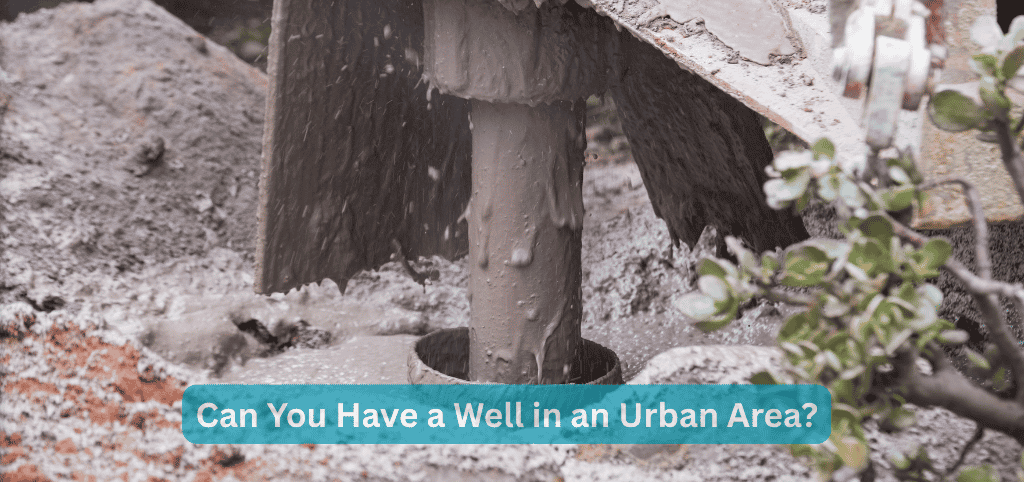
Yes, you can have a water well in some urban areas, but approval depends on local regulations, your intended water use, groundwater conditions, and the property’s suitability. Being inside city limits does not automatically prohibit a well. It also does not guarantee that you can drill one.
Before investing, you need to establish whether a private well is allowed, whether there is a compliant location, and whether drilling equipment can reach it. You should also understand the costs, maintenance responsibilities, and any restrictions on using the water.
At Enloe Drilling & Pumps Inc., we help property owners across Southern Oregon and Northern California plan water wells and pump systems. Our advice for an urban property is straightforward: check the rules and assess the site before making plans around a private water supply. For all your water well drilling needs contact us today
What Determines Whether an Urban Well Is Allowed?
An urban well involves more than finding groundwater. State requirements, local well ordinances, municipal water policies, and groundwater-management rules may all affect the project.
The first questions we want to resolve are:
- Which agencies regulate well construction and groundwater use at this address?
- Does the property have municipal water service, and what does the utility require?
- Will the well supply drinking water, irrigation, or another use?
- Can the proposed location meet applicable construction and separation requirements?
- Are there restrictions affecting new wells or groundwater extraction?
Check these requirements for the actual parcel. A nearby property’s well does not establish that a new well will be approved on yours.
Read our latest blog post: What Tests Should I Do on My Well Water?
Municipal Water Service Can Affect Your Options
Some jurisdictions require connection to public water when service is available. Others may allow private wells alongside municipal service, subject to conditions.
A requirement to remain connected to city water does not necessarily mean every irrigation well is prohibited. Equally, permission to use groundwater does not automatically allow you to replace the municipal drinking-water supply.
Ask the city and water utility about both issues. You need to understand whether drilling is permitted and how an approved private supply may be used.
An Existing Well Does Not Guarantee Permission for a New One
An older property may have a well that predates development or annexation. Its continued use, replacement, alteration, or abandonment may be governed by different requirements.
Do not assume an existing well is exempt from all current rules. Review its records, condition, and legal status before relying on it or planning modifications.
How Do Urban Well Requirements Differ in Oregon and California?
Enloe works on both sides of the state line, where construction and water-use requirements differ. Local conditions still matter within each state.
Urban Wells in Southern Oregon
The Oregon Water Resources Department oversees state well-construction requirements and water rights. Certain groundwater uses qualify for an exemption from obtaining a water right permit, but an exemption does not remove construction requirements or resolve local municipal-water obligations.
Your intended use matters. Household supply, livestock watering, and irrigation can fall under different provisions. Describe the actual use and demand rather than assuming every residential-property well is covered in the same way.
For an urban project, check the applicable state requirements alongside city, county, and utility requirements.
Urban Wells in Northern California
California well-construction permits are administered by local jurisdictions, including counties, cities, and water agencies. Local ordinances must meet or exceed state well standards.
Your project may also require a review of groundwater-management requirements in the applicable basin. The well-permitting agency and Groundwater Sustainability Agency have different responsibilities.
The practical lesson is to confirm the construction requirements and permitted water use before scheduling drilling. Neither should be inferred from the other.
Can You Have an Irrigation Well While Keeping City Water?
In some locations, an approved private well can supply irrigation while the home remains connected to municipal water. Whether this is allowed depends on the local rules and the proposed installation.
This arrangement may interest owners with substantial landscaping or seasonal irrigation demand. However, an irrigation well still needs a suitable site, lawful water use, adequate production, and appropriate plumbing protections.
Irrigation Use Does Not Remove Water-Quality Concerns
Water that is unsuitable for drinking is not automatically suitable for every irrigation use. Its quality may affect plants, soil, equipment, or people exposed to spray.
Testing should reflect the intended use and local risks. An orchard, vegetable garden, lawn, and ornamental landscape may have different water-quality considerations.
Do not assume that labeling the supply non-potable eliminates the need to understand what is in it.
Protect the Municipal Water Supply
A private well must not create an unapproved connection that could contaminate public drinking water. Backflow can occur when pressure changes cause water to move in the wrong direction.
For example, Medford Water identifies auxiliary supplies such as wells as potential backflow hazards requiring protection. The correct arrangement depends on utility requirements, plumbing codes, and the system’s design.
Have the water utility and a qualified plumbing professional establish the required separation or protection. Installing a generic check valve does not establish that a connection is approved or safe.
Why Can a Small Urban Lot Be Difficult to Drill?
An urban property may have groundwater beneath it but lack a suitable drilling location. Buildings, utilities, contamination sources, easements, and equipment access can narrow the available space.
This is why we assess the layout before treating a well as a workable option.
A Backyard Garden Planning Example
Consider an illustrative homeowner with a half-acre urban property who wants an orchard and market garden. The goal is to reduce the cost of seasonal irrigation while keeping municipal water for the house.
The homeowner chooses a convenient drilling spot beside the driveway. A review then identifies a nearby sewer line, an overhead utility conflict, and insufficient access for the proposed drilling equipment.
Even if local rules allow an irrigation well, that particular location may be unsuitable. An alternative site would need to satisfy the applicable requirements and remain accessible for maintenance.
If no suitable location exists, forcing the project forward can create unnecessary expense. Improving irrigation efficiency, changing the landscape, or investigating an appropriate rainwater-storage system may better serve the owner’s goal.
Setbacks Must Be Checked for the Actual Site
There is no single separation distance that applies to every urban well and every nearby hazard. Requirements depend on the jurisdiction, contamination source, and construction standards.
Relevant features may include:
- Sewer infrastructure and septic systems.
- Fuel storage and known contaminated areas.
- Property boundaries and recorded easements.
- Structures and drainage conditions.
- Existing wells and other site constraints.
Do not plan around a general setback number found online. Have the proposed location reviewed against the requirements that apply to your property.
Can a Drilling Rig Reach Your Backyard?
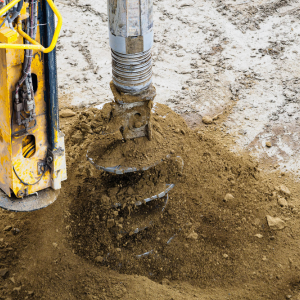
Permission to drill is only one part of feasibility. The equipment must be able to reach the location, set up safely, and complete the work.
The required space depends on the rig, drilling method, support equipment, and ground conditions. We would assess the actual equipment requirements rather than promise that a particular gate width will work for every project.
Gates, Turns, and Working Space
A gate that accommodates a passenger vehicle may not provide suitable access for drilling equipment. Narrow side yards, tight turns, retaining walls, and limited staging space can create obstacles.
The assessment should cover the entire route from the street to the well location. It also needs to account for support vehicles, casing, materials, and safe working space around the rig.
If access requires removing a fence or changing landscaping, include that work and restoration in the project budget.
Overhead Lines and Tree Canopies
The rig needs clearance while traveling and while operating with its mast raised. Overhead electrical lines require particular care and applicable safety clearances.
A location may appear open at ground level while being unsuitable above it. Review wires, branches, roof overhangs, and other overhead obstacles before selecting the drilling position.
Buried Utilities and Surface Damage
Arrange the required utility-location process before drilling or excavation. Private service lines may require additional locating because they are not always covered by standard utility-marking services.
Heavy equipment can also damage surfaces or underground structures that cannot support its load. Driveways, pavers, septic components, buried tanks, and soft ground need consideration.
Discuss access protection and possible restoration costs before work begins.
Keep the Well Accessible for Future Repairs
A well needs service access after the drilling rig leaves. Pumps and associated components may eventually require removal, repair, or replacement.
Do not place the well where a future patio, addition, or enclosed structure will prevent maintenance. A location that works today should remain practical throughout the system’s life.
Is Urban Well Water Safe to Drink?
An urban well can potentially provide drinking water, but safety must be established through appropriate testing, construction, and maintenance. Clear water is not proof of safe water.
Urban groundwater is not automatically contaminated, and rural groundwater is not automatically protected. Both can contain naturally occurring contaminants or pollution associated with surrounding land use.
Potential concerns around an urban property include leaking wastewater infrastructure, historic fuel releases, industrial activities, and other contamination sources. Their relevance depends on the site’s history and groundwater conditions.
Choose Testing Based on the Property’s Risks
Discuss the testing panel with a qualified laboratory or local health authority. Routine drinking-water testing commonly considers bacteria and nitrates, with additional testing guided by regional geology, previous results, and nearby activities.
A property near a known contamination site may need a different investigation from a property without that history. A limited test panel cannot establish that every possible contaminant is absent.
Select Treatment After Identifying the Problem
No single treatment system removes every contaminant. Ultraviolet disinfection, reverse osmosis, filtration, and other methods have specific capabilities and operating requirements.
Choose treatment based on confirmed test results and professional guidance. Include maintenance, replacement components, and follow-up testing in the operating budget.
Will an Urban Well Save You Money?
It may, but savings should be calculated rather than assumed. A well can be a substantial investment, and the financial result depends on construction costs, water demand, municipal rates, and ongoing expenses.
Large irrigation demand can make the calculation more favorable. A small garden may not generate enough avoidable water charges to justify a new well.
Include the Complete Installation Cost
Your budget should consider more than drilling the borehole. Depending on the project, costs may include:
- Permits, required filings, and site review.
- Drilling, casing, and well development.
- Pump equipment, controls, and pressure components.
- Electrical work and trenching.
- Testing and any necessary treatment.
- Utility-required plumbing protection.
- Storage and booster equipment, if needed.
- Access changes and surface restoration.
Urban restoration work can materially affect the total. A quote should make clear which items are included and which require separate contractors.
Compare Avoidable Charges With Ongoing Well Costs
You may continue paying municipal service charges even when a well reduces your purchased water. Sewer billing also depends on the utility’s rules and may not decline in the way you expect.
Compare the water charges you can actually avoid with electricity, maintenance, testing, treatment, and future equipment replacement.
As a hypothetical example, a $20,000 system producing $1,000 in annual net savings would have a simple payback of about 20 years. That calculation excludes financing costs and assumes the annual savings remain consistent.
Our advice is to use your actual bills and a site-specific estimate. Do not base the investment on a promised payback period that ignores operating costs.
Can an Urban Well Provide Backup Water?
A private well can add another water source, but it is not automatically a complete emergency supply. It must be capable of producing usable water when needed, and the system must function during the emergency you are planning for.
A Well Usually Needs Electrical Power
Most pumped wells cannot deliver water during a power outage without a suitable backup arrangement. A pressure tank provides limited stored water; it does not replace an ongoing power supply.
Have a qualified professional evaluate the pump’s electrical requirements and design any generator, transfer equipment, solar, or battery arrangement accordingly.
Emergency power must support the necessary equipment, which may include a booster pump and treatment system as well as the well pump.
Drought Can Affect Groundwater Too
A private well is not a guarantee against drought. Falling groundwater levels can reduce production or leave the pump unable to deliver water.
Review available well records and local groundwater information, while recognizing that nearby records cannot guarantee future performance on your parcel.
Also confirm which restrictions apply to private pumping and water use. Some restrictions concern municipal customers, while others may affect groundwater extraction. The wording and jurisdiction matter.
Storage Can Help Match Supply to Demand
A storage tank may help when a well produces water more slowly than the property’s peak demand. The well fills the tank over time, and a booster system supplies water at the required pressure.
Tank size should reflect measured well production, expected consumption, available space, and the desired reserve. Storage does not increase the aquifer’s sustainable yield.
For emergency planning, distinguish essential household needs from lawn irrigation. The intended purpose should guide the system’s design.
What Should You Check Before Requesting an Urban Well Quote?
Gather the information needed to assess legal, physical, and financial feasibility:
- Your address, parcel identification, city, and county.
- Your municipal water provider and current service arrangement.
- The intended use of the well water.
- Recent water bills and estimated seasonal demand.
- A site sketch showing structures, access, utilities, and the proposed location.
- Available surveys, easement documents, and existing well records.
- Known contamination concerns or previous land uses.
- Your backup-water goals, if emergency supply is part of the project.
Then confirm local requirements and arrange a site assessment. Establishing feasibility early helps you avoid paying for designs or property changes that will not lead to a workable well.
Planning an Urban Well With Enloe Drilling & Pumps
Enloe Drilling & Pumps Inc. provides water well drilling, pump installation, pump repair, and well-testing support across Southern Oregon and Northern California.
Our approach is to understand what you want the water system to achieve, evaluate the property’s constraints, and discuss the work needed to create a practical installation.
For an urban property, that means looking at local requirements, site access, groundwater uncertainty, pump-system needs, and long-term service access together.
You can have a well in some urban areas. The decision should follow a review of your specific property and intended use, supported by realistic costs and clear expectations.
Contact Enloe Drilling & Pumps Inc. to discuss your urban property and request a site-specific assessment and quote. Call 530-964-2807 or 541-841-4124 to begin planning.