Choosing a well drilling company involves more than comparing prices per foot. You are choosing the contractor who will build a water source your household, farm, or business may depend on for decades.
Our advice is to start with two questions: Does the company understand the geology around your property, and who takes responsibility for turning the completed well into a working water system?
At Enloe Drilling & Pumps Inc., our family’s drilling heritage dates back to 1913. We provide water well drilling and pump services across Southern Oregon and Northern California. That regional experience shapes our approach: understand the property, explain the uncertainties, and make the scope of work clear before drilling begins.
Start With Local Geological Experience
A contractor may have excellent equipment and years of experience, but you should still ask how much work they have completed near your property. Drilling through loose valley sediments presents different challenges from drilling through hard, fractured rock.
Local experience helps a contractor anticipate likely drilling conditions, casing needs, and potential water production. It also helps them explain why your well might need a different design from one located several miles away.
Ask About Nearby Well Logs
Ask each company whether they will review available well logs for surrounding properties. These records can provide useful information about drilling depths, rock formations, construction details, and the water production recorded when neighboring wells were completed.
Questions worth asking include:
- Have you drilled wells near my property?
- What do nearby well logs suggest about likely drilling conditions?
- What depths and water yields have been recorded locally?
- What construction challenges should we budget for?
- What remains uncertain until drilling starts?
A knowledgeable contractor should explain both what the records suggest and their limitations. A neighboring well that produces water at 150 feet does not guarantee that yours will do the same. Groundwater conditions can change over short distances, especially in fractured rock.
Read our latest blog: How Much Water Does Your Average Well Produce?
Understand Who Completes the Water System
A drilled well is only one part of your water supply. You also need a pump matched to the well’s production and your water demand, along with appropriate controls, piping, and pressure or storage equipment.
One common oversight is accepting a drilling quote without checking whether pump installation is included. The homeowner then discovers that another contractor must be hired before water can reach the house.
Ask Who Is Responsible for Each Stage
Enloe offers both drilling and pump installation and repair. Working with one company can simplify scheduling and give you a clear point of contact for questions about the completed system.
A drilling-only company can still do excellent work. However, if you use separate contractors, establish their responsibilities before signing. Ask who will handle:
- Well construction and development.
- Water production testing.
- Pump selection and installation.
- Pressure tanks, storage tanks, and controls.
- Electrical work and connections to the property.
- Water sampling and any necessary treatment recommendations.
- Troubleshooting if the finished system does not perform as expected.
The important point is accountability. You should know who to call and how the contractors will coordinate if a problem involves both the well and the pumping system.
Compare the Complete Quote, Not Just the Price Per Foot
The advertised drilling rate can be useful, but it does not tell you what the finished water system will cost. Two contractors quoting different rates may be including very different amounts of work.
Our view is that a clear estimate with realistic allowances is more useful than an attractive starting price with an unclear scope.
Check What Is Included and What Can Change
Ask for a written proposal that identifies the included work, exclusions, estimated quantities, and rates for additional work. Check for:
- Equipment mobilization and site access requirements.
- Estimated drilling depth and the charge for additional footage.
- Casing diameter, material, and anticipated quantity.
- Screens and filter pack materials where the formation requires them.
- The required sanitary seal.
- Well development and production testing.
- Permit, notification, and reporting responsibilities.
- Pump equipment and installation, if included.
- Water testing, electrical work, trenching, and plumbing connections.
- Site cleanup and any restoration exclusions.
Not every cost can be fixed before the geology is known. A transparent contractor explains what could change, how additional costs will be calculated, and when your approval will be requested.
Ask directly: “If drilling conditions differ from your estimate, how will you explain the options and obtain my approval before increasing the cost?”
Discuss the Dry-Hole Policy Before Signing
No contractor can guarantee groundwater simply by studying neighboring wells. A dry hole or a well with insufficient production is a geological risk that should be discussed before equipment arrives.
The most useful question is: “If you reach our agreed depth and find no usable water, what will I owe, and what happens next?”
Get Your Financial Responsibility in Writing
Drilling contracts commonly charge for work performed and materials used, even when the result is disappointing. Your agreement should explain how that situation will be handled.
- Is there a different rate for unsuccessful exploratory drilling?
- Which installed materials will be charged?
- What depth or spending limit triggers a discussion with me?
- Who decides whether to deepen the hole or try another location?
- What would compliant abandonment or sealing cost?
- Are any deposits for uninstalled equipment refundable?
A dry or unsuccessful hole must be handled according to the applicable abandonment requirements. Ask the contractor to explain the required procedure and include its potential cost in your planning.
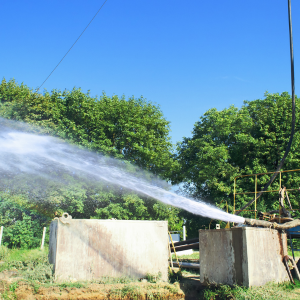
Understand the Options for a Low-Yield Well
A low-yield well is not automatically unusable. Whether it can serve your property depends on its sustained production, seasonal reliability, water quality, and your daily demand.
Depending on the site, options may include further drilling, a different location, or a storage system that collects water gradually and uses a booster pump to meet peak household demand. In suitable fractured-rock wells, a qualified specialist may also assess whether hydrofracturing is appropriate.
These options require a site-specific assessment. A storage tank cannot compensate indefinitely for a well that produces less water than you use, and a low-yield pump needs controls that protect it from running dry.
Ask How the Company Prevents Sand Problems
Finding water is not the end of the job. Well construction must suit the surrounding formation, and the well needs appropriate development before it is put into service.
Consider a homeowner who accepts a low drilling bid and soon finds sand in the water. The pump begins wearing prematurely, filters clog, and the household faces repair bills shortly after paying for a new well.
This example shows why homeowners should ask about construction and development rather than assuming that strong initial water production proves the job is complete.
Screen Design and Well Development Matter
In unconsolidated, sandy formations, suitable screen openings and, where needed, a properly selected filter pack help limit sediment entering the well. The design should match the formation rather than follow a one-size-fits-all approach.
Well development removes drilling residue and mobilized fine material and helps establish water flow into the well. Ask how the contractor will develop your well and assess its performance afterward.
Sand problems can have several causes, so an existing problem needs diagnosis before anyone promises a repair. The practical lesson is simple: understand the construction method and completion work included in your quote.
Verify Licensing, Insurance, and Construction Requirements
Ask for the relevant license details and verify them independently. In Oregon, check water well constructor credentials through the Oregon Water Resources Department. In California, check the contractor’s license status and relevant classification through the Contractors State License Board. California’s C-57 classification covers water well drilling and related well and pump work.
Request current evidence of general liability insurance and workers’ compensation coverage where applicable. Ask the insurance agent to confirm the coverage rather than relying only on a contractor’s verbal assurance.
Ask Which Standards Apply to Your Property
Well construction requirements depend on the jurisdiction, well type, and site conditions. California’s Bulletin 74 establishes minimum well standards, while local requirements may be more stringent. Oregon also regulates well construction and abandonment.
A qualified contractor should explain the requirements relevant to your project, including sanitary sealing and setbacks. Avoid relying on a single seal-depth figure quoted as though it applies to every well in both states.
Read the Warranty and Property-Damage Terms
Ask for separate explanations of the contractor’s workmanship warranty and the equipment manufacturer’s warranty. They may cover different problems and have different conditions.
- What construction defects are covered?
- How long does each warranty last?
- Are labor, travel, and pump removal included?
- What exclusions apply to sediment, water quality, or changing groundwater conditions?
- Who handles a claim, and what records must you keep?
Discuss site access and property protection too. Heavy equipment can disturb soil, but the agreement should explain access preparation, utility locating, cleanup, and how damage claims will be handled. Question broad clauses that appear to remove all responsibility for careless work.
Speak to Customers Whose Wells Have Been Operating for Years
Recent reviews tell you something about the installation experience. Older references can tell you more about long-term performance and after-sales support.
Where possible, speak to local customers whose wells were completed two to five years ago. Ask:
- Did the final invoice match the estimate, or were changes clearly explained?
- How did the crew treat your property?
- Has the well supplied enough water for your needs?
- Have you experienced persistent sand or pump problems?
- Did the company respond when you needed help?
Look for patterns across several references. One difficult project does not tell the whole story, but repeated complaints about unexplained charges or unanswered calls deserve attention.
Choose Clear Communication and Written Commitments
If two or three companies have suitable experience, verified credentials, and good references, pay close attention to how they communicate. Choose the contractor who explains the risks, answers your questions, and gives you a proposal you understand.
Our most important advice is to put every material promise in writing before signing. Permit fees, additional casing rates, testing, cleanup, and warranty commitments should appear in the agreement rather than remain assumptions.
The right company will help you understand what you are buying, what remains uncertain, and how decisions will be made if drilling conditions change.
Discuss Your Property With Enloe Drilling & Pumps
If you are comparing well drilling companies in Southern Oregon or Northern California, Enloe Drilling & Pumps Inc. can help you discuss your property, water needs, drilling plans, and pump system requirements.
Visit Enloe Drilling & Pumps to request a site-specific quote, or call 530-964-2807 or 541-841-4124. Bring your questions and any existing well records so you can make an informed decision about your water supply.