Well water testing can cost around $75 to $150 for a limited laboratory panel, while broader testing may cost $200 to $400 or more. Your final bill depends on the contaminants tested, sample collection, travel, delivery, and any additional services.
These are planning estimates, not a fixed price for every property. A laboratory’s advertised fee may cover analysis only, while professional collection and transportation are charged separately.
At Enloe Drilling & Pumps Inc., our advice is to start with the reason for testing. Routine monitoring, a property purchase, a change in water quality, and a suspected contamination event can require different tests. Choosing the appropriate panel helps you control costs without overlooking an important risk.
What Does the Laboratory Testing Price Include?
A laboratory analyzes the samples you submit for the specific substances or indicators you order. A report only tells you about the parameters tested. It does not establish that every possible contaminant is absent.
Package names can be misleading if you do not review their contents. A basic panel, real estate package, and comprehensive panel may contain different tests at different laboratories.
Basic Well Water Testing
A limited panel may include total coliform bacteria and nitrates. Other packages may also include E. coli, nitrites, pH, or total dissolved solids.
Ask for the exact list before ordering. Do not assume every package called a safety panel contains the same tests.
For routine annual monitoring, CDC guidance recommends testing for total coliform bacteria, nitrates, total dissolved solids, and pH, along with other contaminants of local concern.
Broader Chemical and Mineral Testing
A broader panel may test for arsenic, lead, iron, manganese, hardness, and other chemical or mineral characteristics. These tests can help investigate health concerns, staining, scale, or treatment requirements.
However, a broad mineral panel may not include bacteria, pesticides, or volatile organic compounds. Paying for more parameters does not necessarily mean every relevant risk is covered.
A Published Southern Oregon Price Example
At the time of writing, Neilson Research Corporation lists a $125 real estate package covering arsenic, coliform bacteria, and nitrate. It also lists a $325 Top 35 chemical and mineral package.
These are examples of published laboratory package prices, not Enloe service rates or a guaranteed total collection cost. The listed Top 35 panel does not include coliform bacteria, so an owner seeking both chemical and bacterial testing should confirm the additional analysis needed.
Contact the laboratory for current pricing, package contents, and sample requirements before ordering.
Read our latest blog post: Do I Need a Permit to Drill a Water Well?
Why Can the Total Cost Be Higher Than the Lab Fee?
The most common misunderstanding we hear is that the advertised laboratory price includes a professional visiting the property, collecting the samples, and delivering them.
Some services offer an inclusive package. Others charge separately for each part. The important step is to establish what your quote covers.
Professional Sample Collection
Professional collection may involve selecting suitable sampling points, following test-specific instructions, documenting the collection, and preparing samples for transport.
The labor charge depends on the property, number of samples, and required procedure. Ask whether collection is included rather than treating a general service-fee estimate as a fixed regional rate.
Travel and Sample Delivery
A rural property can require significant travel. A contractor or sampling service may charge for mileage, travel time, or delivery to the laboratory.
Sample handling also varies by test. Some samples require cooling, preservatives, special bottles, or delivery within a short holding time. There is no universal 24-to-48-hour rule that applies to every analysis.
Confirm the laboratory’s instructions before collection. An incorrectly handled or late sample may be rejected, creating another collection trip and additional expense.
Rush Results
Turnaround depends on the analysis and laboratory workload. Some results are available sooner than others, and rush processing may cost extra where available.
Ask when the complete report will be ready. A quick bacteria result does not necessarily mean the chemical results will arrive at the same time.
For a property transaction, schedule testing early enough to allow for interpretation, follow-up sampling, and any necessary work.
Retesting
Follow-up testing may be necessary after an unexpected result, a repair, disinfection, or installation of treatment equipment. Unless your quote includes it, this can involve another laboratory fee and collection charge.
A positive result should be investigated. It does not automatically mean the sample was collected incorrectly, nor does it mean every well requires the same treatment.
How Do You Choose Which Contaminants to Test For?
Our approach is to combine routine monitoring with testing informed by the property’s location, history, previous results, and intended water use.
Buying the largest available package is not always the most useful choice. Ordering only the cheapest test can also leave important questions unanswered.
Regional Geology
Naturally occurring substances such as arsenic can affect groundwater in parts of Southern Oregon and Northern California. Their presence and concentration vary between wells.
Geology can guide the testing plan, but it cannot replace a laboratory result. Neither clear water nor a productive neighboring well establishes your water’s quality.
Historic and Current Land Use
Relevant activities may include agriculture, septic systems, mining, fuel storage, industrial operations, or known contamination sites.
These activities do not prove your well is contaminated. They help identify questions to discuss with the laboratory or local health authority.
“`html
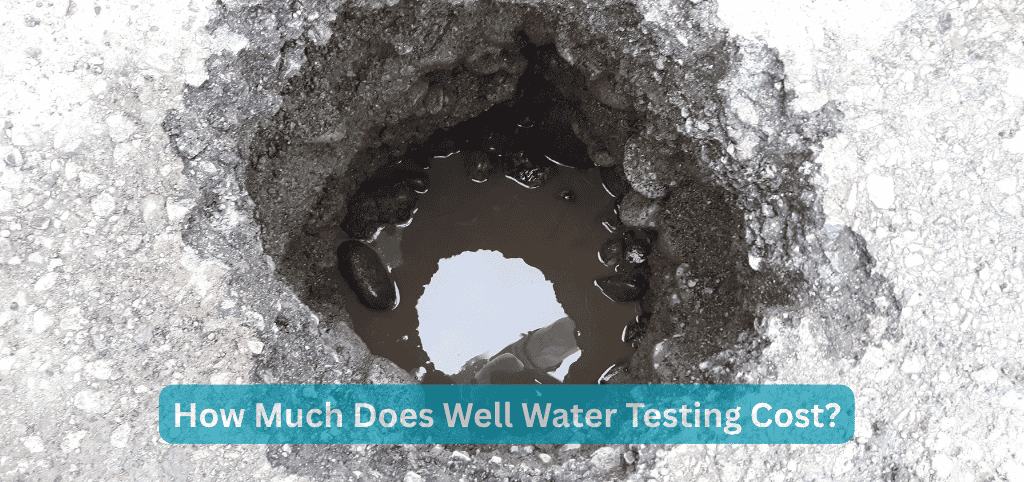
How Much Does Well Water Testing Cost?
For budgeting, basic well-water laboratory testing often costs around $75 to $150, while broader chemical testing can cost $200 to $400 or more. Professional sample collection, travel, delivery, and expedited results may increase the total.
Actual prices depend on the laboratory and the tests ordered. As a regional example, Neilson Research Corporation in Medford lists a $125 real estate package covering arsenic, coliform bacteria, and nitrate. Its broader Top 35 chemical panel is listed at $325. Confirm current pricing and inclusions before booking.
These packages answer different questions. A larger chemical panel does not necessarily include bacteria testing, and a basic bacteria test does not establish that the water is free of arsenic or other chemical contaminants.
At Enloe Drilling & Pumps Inc., our advice is to choose testing around your property’s risks and the reason for the test. The most useful package is the one that provides the information you need to make a sound decision.
What Are You Paying for When You Test Well Water?
A water-testing invoice may include several services. Understanding these components helps you compare quotes accurately.
- Laboratory analysis for the specific contaminants or water-quality characteristics ordered.
- Sample bottles, preservatives, and collection materials, where applicable.
- Professional collection and documentation.
- Travel to your property.
- Delivery or shipping to the laboratory.
- Expedited processing, if available.
- Additional sampling or investigation after an abnormal result.
A laboratory’s advertised package price may cover analysis of samples you deliver yourself. It should not be assumed to include a technician visiting your property.
Ask for the complete scope before comparing a laboratory package with a contractor’s collection-and-testing quote.
How Much Does Basic Well Water Testing Cost?
A budget of approximately $75 to $150 can be a useful starting point for a limited laboratory package. However, there is no universal definition of a basic well-water test.
One package may include bacteria and nitrate. Another may include arsenic as well. Tests for pH, total dissolved solids, nitrite, or other parameters may be priced separately.
Check the Actual Test List
Before ordering, ask which analyses are included and whether E. coli testing is included, performed following a positive total-coliform result, or charged separately.
For routine private-well monitoring, the CDC recommends annual testing for total coliform bacteria, nitrate, total dissolved solids, and pH. Additional testing should reflect local concerns.
A package called a basic safety panel may not cover that entire list. Compare the individual tests rather than relying on the package name.
Why Arsenic Matters in Southern Oregon
Arsenic deserves consideration when planning well-water testing in Southern Oregon. It can occur naturally in groundwater and may be present without changing the water’s appearance, taste, or smell.
Oregon Health Authority recommends testing for arsenic every three to five years, with additional testing guided by previous results and professional advice.
If you have never tested your well for arsenic, a bacteria-only result leaves an important question unanswered.
How Much Does Comprehensive Well Water Testing Cost?
Broader laboratory packages commonly require a larger budget, often around $200 to $400 or more. Specialized analyses can increase the cost further.
Depending on the package, testing may include:
- Arsenic and lead.
- Iron and manganese.
- Copper and other metals.
- Hardness and mineral characteristics.
- Nitrate and nitrite.
- pH, conductivity, or total dissolved solids.
Petroleum-related chemicals, pesticides, volatile organic compounds, and other specialized contaminants may require separate analyses.
Comprehensive Does Not Mean Everything
No ordinary residential package tests for every possible contaminant. A broad metals-and-minerals panel may omit bacteria, pesticides, or industrial chemicals.
For example, Neilson Research Corporation’s published Top 35 panel covers numerous chemical parameters, but its listed analyses do not include coliform bacteria. Someone needing both chemical and bacterial testing should confirm how to order both.
Our recommendation is to establish the testing purpose first, then confirm that the selected package covers it.
What Extra Costs Should You Ask About?
The laboratory fee may be only part of the total, particularly when a professional collects samples from a remote property.
Professional Sample Collection
Collection charges depend on the provider, sampling requirements, number of locations, and time involved. Obtain a specific quote rather than assuming a standard regional service fee.
Professional collection may be useful when documentation is required, access is difficult, or the investigation needs samples from several points in the system.
Homeowner collection may also be acceptable for some purposes. Oregon’s real estate testing guidance allows collection by someone who can follow the required instructions. Lenders or other parties may impose additional conditions, so confirm these before collecting.
Travel and Sample Delivery
Travel charges can affect the total for rural properties across Southern Oregon and Northern California. Ask whether mileage, collection time, and laboratory delivery are included.
Samples must reach the laboratory within the holding time specified for each analysis. Bottle type, preservation, temperature, and delivery instructions can differ between tests.
There is no single 24-to-48-hour rule that applies to every water sample. Obtain the laboratory’s instructions before arranging collection.
Rush Results
Expedited processing may be available at an additional charge, but prices and availability vary. Some analyses cannot be completed immediately, even with a rush request.
As an example, Neilson Research Corporation lists three to five business days for its real estate package and five business days for its Top 35 panel.
Confirm the expected reporting date before booking, especially when a property transaction has a deadline.
Retesting and Follow-Up Visits
A confirmation sample, post-repair test, or treatment-verification test may create another laboratory charge and another collection visit.
Ask whether any follow-up testing is included. Do not assume the original price covers investigation and retesting after an abnormal result.
How Do We Decide Which Tests Are Worth Paying For?
At Enloe, we encourage property owners to consider location, land-use history, existing results, and intended water use. These factors help guide a conversation with the laboratory or local health authority.
A useful review considers:
- Local groundwater and geological conditions.
- Nearby septic systems, livestock, and agricultural activity.
- Known fuel releases, industrial sites, or historic mining activity.
- Previous contamination results.
- The condition of the well and associated equipment.
- Household plumbing materials.
- Whether treatment is installed and what it is designed to remove.
Nearby activity identifies possible testing needs. It does not prove that your well is contaminated.
Regional Data Helps, but Your Own Sample Matters
Oregon DEQ has documented arsenic and elevated nitrate in some wells in the Mid-Rogue Basin. Findings like these support considering regional risks when selecting a panel.
However, another property’s results cannot establish your water quality. Well logs provide construction and geological information, but they do not replace a current laboratory analysis of your water.
An Example of Why a Cheap Panel Can Miss a Risk
Consider an illustrative buyer who orders bacteria and nitrate testing for a rural home. The results are acceptable for those parameters, and the buyer assumes the water has passed a complete safety assessment.
Arsenic was never tested. Its concentration therefore remains unknown, regardless of how clear the water looks.
The lesson is to understand what the report covers. A satisfactory result applies to the substances tested, at the sampling location and time. It is not a guarantee that every possible contaminant is absent.
Is Water-Quality Testing the Same as a Well Inspection?
No. Laboratory testing identifies selected characteristics of the sampled water. A well inspection and yield assessment address different questions.
A water-quality package does not ordinarily establish:
- How much water the well can sustainably produce.
- Whether the pump is correctly sized or functioning properly.
- The condition of the casing, seal, pressure tank, or controls.
- Whether the supply will meet peak household or irrigation demand.
For a property purchase, both water quality and system performance may matter. Ask for separate scopes and prices so you understand what is being evaluated.
What Happens If Your Well Water Test Finds a Problem?
An abnormal result needs a measured response. It does not automatically mean you need an expensive filtration system, and it should not be dismissed as a sampling mistake.
Review the result with the laboratory or health authority promptly. Establish whether you need an alternative drinking-water supply while the cause is investigated.
Check the Sampling Conditions
A sample can be affected by the collection point, handling, incorrect bottles, or missed delivery requirements. A fixture can also introduce bacteria into a sample.
A qualified professional may recommend repeat sampling or samples from different locations to investigate the source. The sampling plan should match the question being asked.
A clean sample from one location does not prove the whole well and plumbing system are safe. It provides evidence to consider alongside other results and the inspection.
Inspect the Well System When Appropriate
A damaged cap, casing, seal, or poor drainage around the well may allow contamination to enter. Physical inspection can help identify defects that need repair.
However, bacteria or nitrate results alone do not establish that the well has a structural failure. Groundwater conditions and surrounding contamination sources may also contribute.
Repair recommendations should follow an investigation rather than an assumption about the cause.
Match Treatment to the Confirmed Contaminant
Treatment should be selected for the actual contaminant, concentration, water chemistry, and required flow. Equipment and installation costs vary too widely to infer an accurate treatment price from a failed test alone.
Disinfection does not remove arsenic or nitrate. A water softener is not a universal contaminant-removal system. Other treatment methods also have specific capabilities and maintenance requirements.
Get a separate treatment estimate that includes installation, consumables, maintenance, and follow-up testing. Confirm that treated water meets the intended requirements before relying on it.
How Often Should You Budget for Testing?
Plan for routine monitoring rather than waiting for a noticeable change. Many contaminants are invisible and have no detectable taste or smell.
Annual Testing and Periodic Regional Checks
The CDC recommends annual testing for total coliform bacteria, nitrate, total dissolved solids, and pH. Oregon Health Authority recommends arsenic testing every three to five years.
Your laboratory or health authority may recommend a different schedule based on previous contamination, treatment, household circumstances, or local conditions.
A broader initial assessment can establish a baseline. Subsequent testing should retain routine checks and periodic monitoring of relevant risks.
When Additional Testing May Be Needed
Seek guidance about additional testing after:
- Flooding or suspected contamination.
- Wildfire damage affecting the well or water system.
- Well repairs or equipment replacement.
- Changes in taste, color, or odor.
- Septic-system failure or a nearby contamination incident.
- Unexplained illness that could be related to the water.
- Changes in household vulnerability or local health advice.
These events supplement routine testing. They should not be the only reason you test for a known regional concern.
What Testing Do You Need When Buying or Selling a Home?
Property transactions can involve state requirements, lender conditions, and additional buyer due diligence. These are not always identical.
Oregon Real Estate Testing
For qualifying Oregon property transactions involving a domestic well, the seller must arrange testing for arsenic, nitrate, and total coliform bacteria. Samples must be analyzed by an accredited laboratory, and results must be shared and reported as required.
That required panel is not an inspection of the pump or a guarantee of adequate well yield. Buyers should consider whether additional testing and system assessment are appropriate.
California and Lender Requirements
For a Northern California purchase, confirm applicable local requirements and obtain the lender’s written testing conditions.
There is no single expanded laboratory package that should be described as mandatory for every VA, FHA, or conventional loan. Confirm the actual requirements before ordering.
Ask which tests are needed, who may collect the samples, which laboratories are acceptable, and how recent the results must be.
Test Early Enough to Investigate Results
Order testing early in the due diligence period. Leave time for results, clarification, additional samples, and estimates if a problem is found.
A finding may affect purchase negotiations, but seller repairs or credits depend on the agreement and circumstances. Testing does not automatically require the seller to pay for treatment.
How Can You Keep Well Water Testing Affordable?
Our approach is to reduce unnecessary spending while keeping the tests that address meaningful risks.
- Define the purpose of the test before choosing a package.
- Use a laboratory accredited or certified for the required analyses.
- Compare the actual test lists and identify missing parameters.
- Ask whether package pricing is cheaper than ordering individual tests.
- Confirm collection, travel, delivery, and rush charges in advance.
- Use the laboratory’s bottles and follow its instructions.
- Keep reports so future decisions can build on existing results.
- Plan early to reduce avoidable rush fees.
- Ask about current public testing programs, where available.
Home collection may save money when it is acceptable and you can follow the instructions. Professional collection may be more practical when documentation, access, or diagnostic sampling is complicated.
The cheapest test is poor value if it omits the contaminant you needed to investigate. Equally, a large package is unnecessary expense if it does not answer your actual question.
Well Water Testing Support From Enloe Drilling & Pumps
Enloe Drilling & Pumps Inc. provides water well drilling, pump installation, pump repair, and well-testing support across Southern Oregon and Northern California.
Laboratory results help identify water-quality concerns. A professional system assessment helps determine whether physical well or pump issues also need attention.
When requesting assistance, tell us whether the testing is for routine monitoring, a property purchase, a change in water quality, or a known contamination concern. Share previous reports and any lender requirements so the next steps can address your situation.
For budgeting, expect basic laboratory testing to be roughly $75 to $150 and broader analysis to be around $200 to $400 or more, with collection and other services potentially adding to the total. Obtain a current, itemized quote before booking.
Contact Enloe Drilling & Pumps Inc. at 530-964-2807 or 541-841-4124 to discuss your well and the testing or system assessment you need.