
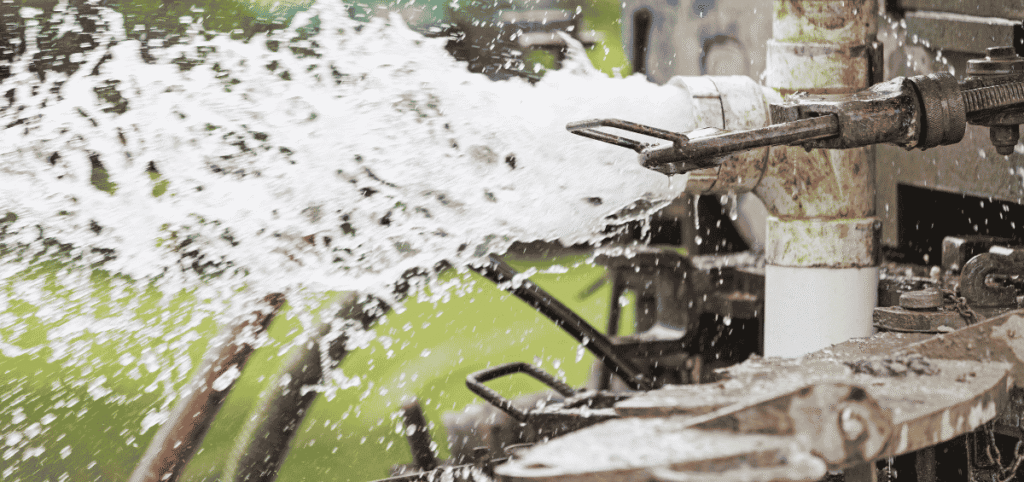
If there is one question every homeowner asks before drilling a water well, it is, “How deep does it need to be in Southern Oregon?”
It is also one of the hardest questions to answer because there is no universal depth that guarantees success.
After years in the well drilling industry, I can tell you that the biggest misconception homeowners have is believing that underground water exists like a giant underground lake and that drilling deeper automatically means finding more water. That simply is not how groundwater works.
Water moves through fractured rock, gravel deposits, porous aquifers, and underground geological formations that can change dramatically within just a few metres. Two neighbouring properties can have completely different drilling outcomes. We service both Southern Oregon and California areas for all your drilling and pump needs.
If you understand that one fact before your drilling project begins, you will have far more realistic expectations about costs, timelines, and ultimately your chances of success.
Read our latest blog post: How Much Does It Cost to Drill a Water Well in Southern Oregon?
There Is No “Perfect” Water Well Depth Southern Oregon
The first thing I explain to homeowners is that geology determines the depth of a well, not a number someone found online or the depth of their neighbour’s borehole.
I often compare the ground beneath your property to a giant block of Swiss cheese.
Some sections are full of water-bearing fractures and porous rock. Other sections are completely solid and dry. Drilling a well is about intersecting one of those productive pathways, not simply drilling deeper.
Many people picture drilling as lowering a straw into a full glass of water.
The reality is very different.
It is more like pushing a straw into a giant sponge. Some areas are completely saturated while others are bone dry. Success depends on where the straw enters the sponge, not how far it travels.
Why Your Neighbour’s Well Means Very Little
One of the most common conversations I have is with homeowners who tell me:
“My neighbour found water at 60 metres, so that’s where we should stop.”
Unfortunately, underground geology doesn’t respect property boundaries.
I remember one property where the homeowner insisted we stop drilling at exactly the same depth as the neighbour because they believed going deeper would simply waste money.
At 60 metres we were still drilling through dry granite.
After discussing the situation, we continued drilling.
At 110 metres we intersected a massive water-bearing fracture that produced an excellent water supply.
If we had stopped where the neighbour found water, that property would have ended up with a completely dry well.
That experience reinforced something I explain to every client.
Depth does not determine water.
Geology does.
What Information I Look At Before Drilling Southern Oregon
Before a drill rig even arrives on site, I spend time building the clearest possible picture of what lies underground.
This includes looking at:
- State and local well logs from nearby properties
- Geological and hydrogeological maps
- Rock formation information
- Historical drilling records
- Previous jobs completed in the same area
Nothing replaces local experience.
If I’ve drilled several successful wells in the same valley or along the same ridge, those previous jobs become some of the most valuable information available.
However, they are still only guides.
Nature always has the final say.
Why Neighbouring Wells Can Be Misleading
Nearby wells can certainly provide useful information.
What Neighbouring Wells Can Tell You
- Water quality
- Water chemistry
- Common minerals
- Typical production rates
- Whether a productive aquifer exists nearby
What they cannot guarantee is that your property will produce identical results.
A productive fracture supplying your neighbour’s well might pass only metres away from your drilling location.
Move the rig slightly, miss that fracture, and your well could require double the depth before reaching the next productive water source.
That is simply the reality of groundwater.
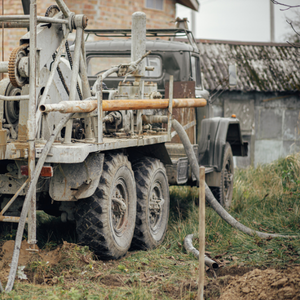
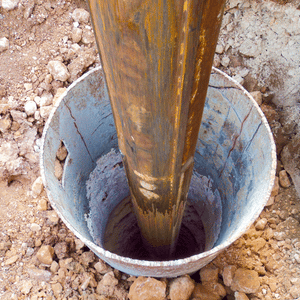
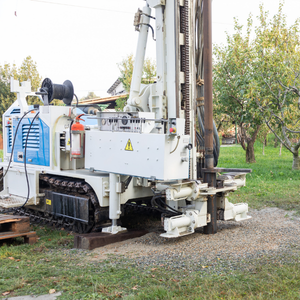
Setting Honest Expectations Before Drilling Starts
One of the most important parts of my job is making sure homeowners understand exactly how well drilling works before the first hole is drilled.
I explain that most drilling contracts include:
- A mobilisation or setup fee
- A cost per metre drilled
- Additional costs for casing where required
- Pump installation after a successful well
I also explain something many homeowners don’t expect.
Drillers are paid for drilling.
No ethical contractor can guarantee that water will be found at a specific depth.
Because of this uncertainty, I often recommend establishing a maximum drilling depth before work begins.
If we reach an agreed depth without success, we stop, review the geological information, and decide whether continuing makes financial sense.
Having that conversation early prevents major surprises later.
When All The Data Was Wrong
One project still stands out after all these years.
The property sat in a valley surrounded by five highly productive wells.
Every single neighbouring well log looked almost identical.
- Six metres of clay
- Clean gravel
- Large water supply at roughly 25 metres
It looked like one of the easiest drilling jobs imaginable.
Instead, after the clay layer, we encountered a buried prehistoric canyon filled with tightly packed dry silt and glacial material.
The geological maps had completely missed this isolated feature.
The expected 25-metre well disappeared instantly.
We eventually drilled approximately 140 metres before finally reaching a deep bedrock fracture that supplied water.
A one-day project became four days.
That job reminded everyone involved that geological maps are incredibly useful, but they are never guarantees.
Does Drilling Deeper Always Mean Better Water?
Not necessarily.
Deeper is only better if it reaches a more reliable aquifer.
Generally speaking, wells between approximately 60 and 120 metres often provide excellent long-term reliability for domestic properties because they reach more stable groundwater systems.
However, drilling excessively deep can also introduce new challenges.
Deep groundwater sometimes contains elevated levels of:
- Iron
- Manganese
- Sulphur
- Salt
Treating highly mineralised water can require expensive filtration systems.
That is why drilling should always target the right geological formation rather than simply aiming for maximum depth.
Why Deep Wells Handle Drought Better
One major advantage of deeper wells is their resilience during dry conditions.
Shallow Wells
Shallow wells rely on the upper water table.
Think of that water table like a bank account that rises after rainfall and drops during drought.
If the water level falls below the pump intake, the well effectively runs dry.
Deep Wells
Deep wells behave very differently.
They draw water from aquifers that often respond very slowly to seasonal weather patterns.
Many also contain a substantial column of stored water inside the well itself.
Even if groundwater enters the well slowly, that stored water acts as an underground reservoir capable of meeting household demand throughout the day.
The Most Common Regret I See
One mistake appears repeatedly.
Homeowners decide to stop drilling as soon as they find a small amount of water because they want to save money.
For example, they might encounter a modest water-bearing fracture at around 30 metres producing roughly 15 litres per minute.
Against professional advice, they stop drilling.
Everything seems fine for a year or two.
Then drought arrives.
The shallow water table drops.
Suddenly the well can no longer meet household demand.
Now they need the drilling rig to return.
That means paying another mobilisation fee and attempting to deepen an existing well, which is often more expensive and more complicated than completing the job properly the first time.
When Spending More Actually Saves Money
There are times when I recommend spending more during the initial drilling project.
If we reach water but know the upper groundwater is vulnerable to seasonal fluctuations or contamination, I may recommend drilling deeper and installing additional casing.
Doing this can:
- Improve long-term reliability
- Reduce contamination risks
- Protect against drought
- Avoid future drilling costs
It may increase today’s invoice, but it often saves thousands over the lifetime of the well.
The Most Surprising Wells I’ve Ever Seen in Southern Oregon
The 6-Metre Wonder
One of the shallowest successful wells I’ve encountered reached incredible production at just six metres.
The drill suddenly entered an ancient buried riverbed packed with clean gravel.
Water flowed into the borehole so rapidly that the drilling crew struggled to pump it away.
The well ultimately produced more than 380 litres per minute.
That project demonstrated how perfect geology can outperform extraordinary depth.
The 305-Metre Breakthrough
At the opposite extreme was a mountain property where everything suggested water would appear between 90 and 120 metres.
It didn’t.
We drilled through hard granite past 120 metres.
Then 180 metres.
Then 250 metres.
Nothing.
By 300 metres, the homeowner believed the project had failed and was ready to abandon the property.
After reviewing the mountain’s structural geology, we decided to continue one final day.
At approximately 305 metres, the drill entered a massive rock fracture.
Water erupted from the borehole almost instantly.
That experience reinforced another important lesson.
Groundwater in fractured rock is often all or nothing.
Stopping one metre too early can mean walking away from an excellent water supply.
My Advice To Every Homeowner
After years of drilling wells in every type of geology, my advice has remained remarkably simple.
Drill for the Future Climate, Not Today’s Budget
If your driller believes another section of rock offers significantly better long-term reliability, seriously consider following that recommendation.
You only want to pay for a drilling rig to visit your property once.
Trying to save money by stopping early often becomes the most expensive decision of the entire project.
A well is one of the most important investments you will ever make for your property.
Think beyond today’s drilling cost.
Think about having reliable water for the next 30 to 50 years.
That mindset almost always leads to the best long-term outcome.