Water Well Drilling Companies Jacksonville Oregon
Call us TODAy
✓ Call Your Local Well Drilling Experts
✓ Request a Free Drilling Quote
✓ Plan Your Well With Local Experience
✓ Start Your Water Well Project Today
Water Well Drilling Companies
Developing a dependable water well near Jacksonville requires careful evaluation of the property’s geology, elevation and intended water use. The area extends from older creek deposits along the western edge of Bear Creek Valley into rolling foothills underlain by weathered and fractured bedrock. Conditions can change considerably between a rural homesite near Jacksonville, a vineyard along Highway 238 and a wooded property toward Ruch or the Applegate Valley.
Enloe Drilling & Pumps provides top quality water well drilling in Jacksonville, Oregon for homeowners, farmers, vineyard owners, ranchers and commercial property owners. Our multigenerational team studies nearby Oregon well reports, anticipated geological formations, equipment access and total water requirements before recommending a drilling plan.
The City of Jacksonville purchases treated water from the Medford Water Commission and distributes it through the local municipal system. Private wells are more common on rural acreage, agricultural land and undeveloped properties beyond the city’s water-service boundary.
Local Geology and Drilling Conditions in Jacksonville
Jacksonville sits along the western margin of Bear Creek Valley at the base of the Klamath-Siskiyou foothills. The surrounding area contains creek-deposited sediment, older gravel terraces, weathered metamorphic formations and hard rock associated with the Applegate geological terrane.
Groundwater may occur in sand and gravel, within weathered material above solid bedrock or through fractures in consolidated rock. Each setting affects the possible well depth, production rate, casing requirements and drilling method.
Jackson Creek and Valley-Edge Deposits
Lower properties near Jackson Creek and the edge of the valley may contain layers of clay, silt, sand, gravel and cobbles. These materials were deposited by streams and erosion from the surrounding hills.
Coarse sand and gravel can transmit useful amounts of groundwater where the deposits are sufficiently thick and connected to recharge. Clay-rich layers may hold moisture but release it too slowly to support a household, vineyard or livestock operation.
Buried gravel channels can be narrow and irregular. One property may encounter a productive gravel layer, while another nearby site reaches weathered bedrock with only limited groundwater.
Loose material may require additional casing, an appropriate well screen and thorough development. These construction decisions help support the borehole, control sediment and improve the completed well’s performance.
Historic Mining Ground and Reworked Gravel
Jacksonville developed after gold was discovered in local stream deposits during the 1850s. Historic placer and hydraulic mining altered portions of the landscape around Jacksonville, Sterling Creek and the wider Applegate area.
Some rural properties may contain reworked gravel, mining tailings, old ditches or filled ground. These materials can differ from undisturbed natural formations and may create unstable or highly variable drilling conditions.
Historical mining does not mean that every parcel contains abandoned workings. However, past land disturbance should be considered when reviewing access, selecting a drilling location and evaluating potential water-quality concerns.
Well water near former mining areas should be tested for naturally occurring minerals and any contaminants associated with historic land use. The required testing should reflect the property’s geology and known history.
Applegate Terrane and Fractured Foothill Rock
Properties west and south of Jacksonville may encounter hard bedrock associated with the Applegate terrane. Local formations can include metamorphosed volcanic and sedimentary rock, ultramafic material, intrusive rock and quartz-bearing zones.
Solid bedrock generally provides groundwater through fractures, joints, faults and weathered contacts rather than through open pore space. The amount of water available depends on the size and connectivity of these openings.
A shallow fracture may provide seasonal water but decline during a dry Southern Oregon summer. Drilling may continue to reach additional fractures or create more water-column storage for the pump.
Fractured-rock production can change within a short distance. Nearby well records provide valuable guidance, but they cannot identify the exact depth of a productive fracture on an undrilled parcel.
Typical Water Well Depths in Jacksonville
Well depths around Jacksonville vary because the 97530 area includes valley-edge land, historic mining ground, agricultural acreage and mountainous properties extending into the Applegate Valley.
Aggregated Oregon well records indicate a median completed depth of approximately 200 feet for the 97530 area. Many wells may fall within a broad planning range of approximately 100 to 350 feet.
Wells completed in favourable sand, gravel or weathered rock may be shallower. Properties relying on fractured bedrock can require drilling to 400 feet or deeper when productive openings are widely spaced.
These figures are general planning references and not guaranteed drilling depths. Two wells situated close together can have different depths, water levels and production rates because underground formations are not uniform.
Before developing a Jacksonville drilling plan, we consider:
- Oregon well reports for nearby properties
- Recorded well depths, static water levels and yields
- The parcel’s position between Bear Creek Valley and the foothills
- The thickness of creek deposits and older gravel
- The type and condition of the underlying bedrock
- Evidence of historic mining or disturbed ground
- Seasonal groundwater changes and drought conditions
- Nearby domestic and agricultural pumping
- The required household, vineyard or livestock volume
- Septic systems and possible contamination sources
- Available space for pumps, controls and storage equipment
A nearby well may provide a useful comparison, but a drilling plan should not be based on one record alone. The final construction depth should reflect the water-bearing zones, recovery rate and available water column encountered during drilling.
Residential, Agricultural and Commercial Water Requirements
Residential Water Wells Near Jacksonville
A residential well may need to supply drinking water, bathrooms, laundry, appliances and outdoor faucets. Rural Jacksonville properties may also require water for landscaping, guest accommodation, workshops, swimming pools, gardens, horses or emergency fire storage.
Peak demand often places more pressure on a well system than the household’s total daily consumption. Several showers, a washing machine and outdoor watering may operate within the same short period.
A moderate-producing well can sometimes serve a home successfully when it is paired with adequate storage. The well fills the tank at a controlled rate, while a separate pressure pump supplies the house during periods of greater demand.
Benefits of a properly designed residential well system include:
- An independent supply for qualifying rural properties
- A pump selected according to tested well performance
- Storage options for wells with moderate recovery
- Reserve capacity for periods of peak household use
- Water planning for gardens and limited livestock
- Reduced pump cycling and unnecessary equipment wear
- Accessible components for future maintenance
New well water should be tested before it is used regularly for drinking or cooking. Recommended testing may include total coliform bacteria, nitrate, arsenic and other substances connected to local geology, nearby agriculture or historical land use.
Vineyard, Agricultural and Commercial Wells
The countryside surrounding Jacksonville supports vineyards, orchards, lavender farms, pasture, livestock and specialty agriculture. Water demand can rise considerably during the hot and dry summer growing season.
A vineyard using drip irrigation has different flow requirements from pasture irrigation or multiple livestock troughs. The acreage, crop, soil, irrigation method and operating schedule should be considered before the well and pump system are designed.
Commercial properties may require water for customers, employees, kitchens, cleaning, tasting rooms or other operations. These demands can involve higher peak flow and additional water-quality requirements.
Oregon exempts certain groundwater uses from the standard water-right permitting process. Qualifying domestic use and stock watering are common examples. Larger irrigation, commercial and industrial uses generally require approval from the Oregon Water Resources Department.
A productive well does not automatically authorise unlimited agricultural or commercial pumping. Confirm the proposed use and water-right requirements before drilling or expanding an operation.
Access Considerations for Rural Jacksonville Properties
Rural Jacksonville properties may have steep driveways, narrow roads, sharp turns and heavily wooded sections. Vineyards and farms can also include irrigation lines, drainage ditches, gates and cultivated areas that must be protected during drilling.
A drilling rig and its support vehicles require more clearance and load capacity than a passenger vehicle. A private road that appears suitable during dry weather may become soft or unstable after winter rain.
Before equipment is mobilised, we assess:
- Road width, grade and surface condition
- Gate openings and available turning space
- Bridge, culvert and cattle-guard capacity
- Soft shoulders, erosion and seasonal drainage
- Vineyard rows, orchard trees and active crops
- Irrigation pipes and underground utilities
- Low branches and overhead power lines
- Space for the rig, support trucks and casing
- Historic ditches, mining ground or unstable fill
- Distance from septic systems and animal enclosures
- Permanent access for pump and well servicing
Access preparation may include trimming trees, widening a gate, reinforcing a culvert or placing compacted rock on soft sections. Sloping sites may require a properly prepared and level drilling pad.
The completed wellhead should remain outside vineyard rows, regular tractor routes and future building areas. Service equipment must be able to reach the well when the pump eventually requires inspection, maintenance or replacement.
Oregon Well Permits and Construction Requirements
Private water well construction near Jacksonville is regulated primarily by the Oregon Water Resources Department. A licensed and bonded Oregon water well constructor normally performs the drilling, submits the required start card and files a completed well report.
Oregon construction standards address casing, sanitary seals, surface protection and separation from potential contamination sources. The well location must be coordinated with septic tanks, drainfields, replacement drainfields, sewer lines, livestock enclosures, fuel storage and chemical-handling areas.
A water-supply well generally must remain at least 100 feet from a septic drainfield or sewage-disposal facility unless an approved exception applies. Other required distances may apply to septic tanks, sewer lines, buildings and contamination hazards.
Developed properties within Jacksonville may receive municipal water and sewer service. Rural parcels beyond those systems commonly rely on a private well and onsite septic system. Residential and small-business septic permitting in Jackson County is administered through the Oregon Department of Environmental Quality’s Medford office.
The normal process includes:
- Confirming whether Jacksonville municipal water is available
- Defining the intended domestic, agricultural or commercial use
- Determining whether an Oregon water right is required
- Reviewing nearby well reports and geological conditions
- Checking the property for historic mining or site constraints
- Selecting a location that meets current separation standards
- Coordinating the well with the sewer or septic plan
- Preparing a stable equipment route and drilling area
- Submitting the required well-construction notification
- Installing approved casing and sanitary seals
- Developing and evaluating the completed well
- Selecting the pump, controls and storage equipment
- Submitting the final well report and recording documents
Construction rules, water-right requirements and fees can change. Property owners should confirm current procedures with the Oregon Water Resources Department, Oregon DEQ, Jackson County and the City of Jacksonville when applicable.
Communities We Serve Near Jacksonville
Our Jacksonville water well drilling service includes qualifying properties in and around:
- Jacksonville
- Ruch
- Applegate
- Buncom
- Sterling
- Little Applegate
- Upper Applegate
- Griffin Creek
- Forest Creek
- Poorman Creek
- Medford
- Rural properties along Highway 238
- Vineyards throughout the Applegate Valley
- Wooded properties in the surrounding foothills
Illustrative Jacksonville Water Well Drilling Scenario
The following example demonstrates how a typical Jacksonville-area project could be planned. It is an illustrative scenario and is not presented as a completed Enloe customer project.
Imagine a couple developing rural acreage between Jacksonville and Ruch. Their plans include a three-bedroom home, a guest cottage, a small vineyard and water for three horses. The property is outside the municipal water-service area.
Nearby well reports show varied depths because some wells produce from weathered rock while others extend farther into fractured bedrock. The proposed drilling location must remain clear of the septic drainfield, horse enclosure and an old irrigation ditch crossing the property.
The first step would be to calculate the combined domestic, livestock and vineyard demand. The access road would then be evaluated for width, grade, overhead branches and the capacity of a culvert near the entrance.
If the completed well provided a dependable household supply but could not meet the vineyard’s full peak irrigation demand directly, a storage tank could collect water between irrigation cycles. The vineyard could then be divided into smaller drip-irrigation zones.
This design would reduce stress on the well while providing reserve capacity for the home and animals. It shows why sustainable production, storage, irrigation scheduling and pump selection matter as much as completed depth.
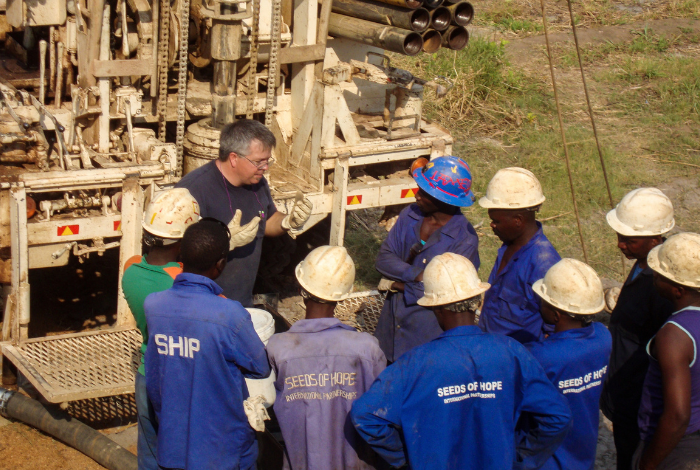
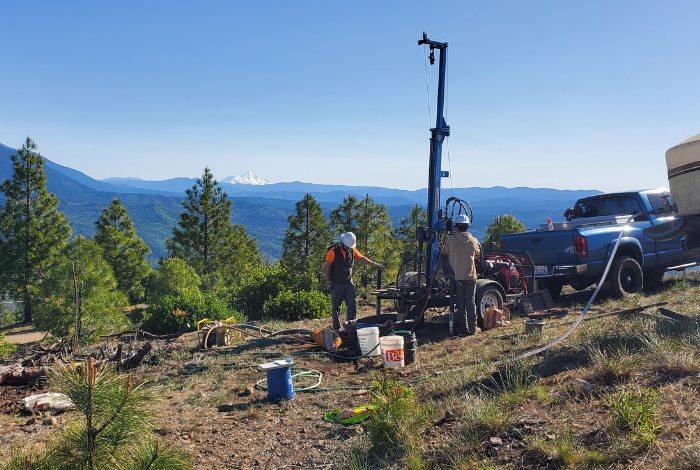
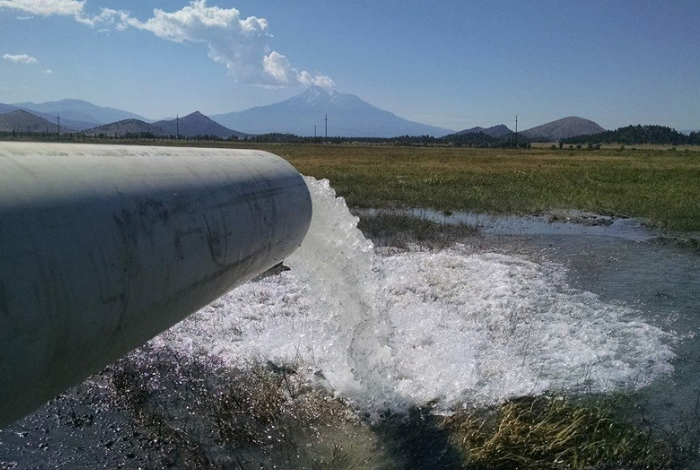
Images of some of our Drilling Projects


Benefits of Well drilling in acksonville, Oregon
Jacksonville wells may pass through clay, stream gravel, mining tailings, deeply weathered rock and hard fractured bedrock. Experience with these changing formations helps the drilling team adjust casing and construction decisions as actual conditions become known.
Choosing Enloe Drilling & Pumps provides several practical advantages:
- Multigenerational water well drilling experience
- Knowledge of Southern Oregon valley and foothill geology
- Planning informed by nearby Oregon well reports
- Residential, agricultural and commercial drilling capabilities
- Well development, production testing and pump services
- Storage options for moderate-producing wells
- Practical access planning for vineyards and wooded acreage
- Clear explanations of depth, production and equipment choices
We do not guarantee a fixed depth or water yield before drilling begins. We review the available records, geological information and property requirements, then base final construction and pump-system decisions on the formations and production encountered.
Your questions answered
FAQ About Water Well Drilling in Jacksonville, Oregon
What is the typical water well depth near Jacksonville?
Aggregated Oregon well records for the 97530 area indicate a median completed depth of approximately 200 feet. Many wells may fall within a broad planning range of about 100 to 350 feet. Foothill properties in low-producing fractured rock can require drilling beyond 400 feet.
Can I drill a private well inside Jacksonville?
That depends on the parcel, the availability of municipal water and local development requirements. Jacksonville purchases treated water from the Medford Water Commission for its public system. Confirm whether a city connection is available before planning a private well.
Does historic mining affect water well drilling?
It can. Some properties may contain disturbed gravel, tailings, old ditches or filled ground. Historic mining may also influence water-quality testing decisions. The parcel’s history and actual site conditions should be reviewed before drilling.
Do I need a water right to irrigate a vineyard?
Larger vineyard and agricultural irrigation uses generally require an Oregon water right. A completed well does not automatically authorise unrestricted irrigation. Confirm the proposed use with the Oregon Water Resources Department before drilling.
How should I prepare a rural Jacksonville property for drilling?
Provide a stable road with sufficient width, height and turning space for heavy vehicles. Mark septic components, irrigation lines, utilities and historic ditches. Check gates and culverts, reinforce soft sections and keep the completed well accessible for future service.
Locations in Oregon we Service
5 Interesting Facts About Jacksonville, Oregon
- Jacksonville began as a gold-rush town. Gold was discovered in the area during the early 1850s, attracting miners, merchants and settlers to Southern Oregon.
- Much of Jacksonville is a National Historic Landmark District. The city has preserved numerous 19th-century homes, commercial buildings, churches and public structures.
- Jacksonville was once the seat of Jackson County. It served as the county’s political and commercial centre until the county seat moved to Medford in 1927.
- The city hosts the Britt Music & Arts Festival. Outdoor concerts are held on the historic hillside estate of photographer and pioneer Peter Britt.
- Jacksonville is a gateway to the Applegate Valley wine region. The surrounding countryside contains vineyards, tasting rooms, farms and scenic routes through one of Southern Oregon’s recognised wine-growing areas.
Read Our Latest Blogs

How Deep Does a Water Well Need to Be?
If there is one question every homeowner asks before drilling a water well, it is, “How deep does it need to be in Southern Oregon?”

How Often Should a Private Residential Well Be Tested?
A private residential well should generally be tested every year for total coliform bacteria, E. coli, and nitrates. In Southern Oregon, the Oregon Health Authority

Is an 80 Foot Well Deep Enough for My Property?
One of the most common questions I hear from homeowners is, “Is an 80-foot well deep enough for my property?” My answer usually surprises them.
Get in Touch
For all your water well drilling and pump needs contact us today
Address
507 Hummingbird Lane, Talent, OR 97540
Enloedrillingandpumps@gmail.com
Call Us
530-964-2807