
Water Well Drilling White City Oregon
Call us TODAy
✓ Call Your Local Well Drilling Experts
✓ Request a Free Drilling Quote
✓ Plan Your Well With Local Experience
✓ Start Your Water Well Project Today
Water Well Drilling Company
Planning a dependable water well near White City requires an understanding of the area’s shallow valley deposits, dense clay layers, older gravel terraces and nearby volcanic formations. Drilling conditions can change between a rural parcel on the Agate Desert, an agricultural property near Antelope Creek and land extending toward the Rogue River or Table Rocks.
Enloe Drilling & Pumps provides professional water well drilling in White City, Oregon for homeowners, farmers, ranchers, commercial facilities and industrial property owners. Our multigenerational team uses nearby Oregon well reports, geological information, site access and expected water demand to develop a practical drilling plan.
Medford Water directly serves many homes and businesses within White City. Its primary water sources include Big Butte Springs and the Rogue River. Private wells are more common on rural properties, undeveloped parcels and agricultural land outside the existing public-water network.
Local Geology and Drilling Conditions in White City
White City sits on the northern side of Bear Creek Valley near the Rogue River, Antelope Creek and the volcanic Table Rocks. The area includes layers of clay, silt, sand, gravel, cobbles and older volcanic material.
Groundwater may be found in permeable sand and gravel, along contacts between different sediment layers or within fractures in consolidated rock. The depth and productivity of these zones vary across the White City area.
Agate Desert Soils and Valley Sediments
Much of the land surrounding White City forms part of the Agate Desert. Despite its name, this area is not a conventional sandy desert. It contains broad grasslands, shallow mounds, clay-rich soil and seasonal vernal pools.
Local soils may include a dense subsurface layer known as duripan or hardpan. This layer can slow the downward movement of surface water and contribute to temporary winter and spring ponding. Seasonal water at the surface does not mean a shallow well will provide a reliable year-round supply.
Below the soil, drilling may encounter alternating layers of clay, silt, sand and gravel. Coarse gravel can transmit useful amounts of groundwater when it is sufficiently thick and connected to recharge. Clay may hold moisture but release it too slowly to support sustained pumping.
Loose sand and gravel may require an appropriate screen, additional casing and careful well development. These measures help stabilise the borehole, reduce sediment and improve the completed well’s performance.
Antelope Creek and Rogue River Deposits
Properties near Antelope Creek, Bear Creek and the Rogue River may contain younger stream deposits. These formations can include sand, rounded gravel, cobbles and fine overbank sediment left behind as waterways changed position.
Connected sand and gravel deposits may provide productive groundwater. However, the thickness and extent of these layers can change quickly. A productive underground gravel channel may narrow or disappear before reaching a neighbouring property.
Shallow groundwater near waterways and developed land can be vulnerable to contamination. The well location and sanitary seal must protect the water supply from septic systems, livestock waste, industrial activities, fertilizers, fuel and polluted surface runoff.
Floodplain conditions should also be considered. The finished wellhead should be protected from ponding and positioned so that surface water drains away from the casing.
Older Gravel and Volcanic Formations
Properties closer to the Table Rocks, Agate Lake or the eastern foothills may encounter older gravel, cemented sediment and volcanic rock. These formations can be considerably harder than the loose material found on the valley floor.
Groundwater in volcanic rock normally moves through fractures, joints and contacts between separate rock layers. Dense basalt may produce little water until drilling intersects a connected fracture.
Production from fractured rock can differ over short distances. One well may encounter several productive openings, while another requires additional depth to establish an adequate water column and recovery rate.
Typical Water Well Depths in White City
Water well depths around White City vary according to the thickness of valley sediment, the location of buried gravel channels and the depth of volcanic or consolidated rock.
Aggregated Oregon well records for the 97503 area indicate a median completed depth of approximately 120 feet. Many recorded wells fall within a broad range of about 80 to 200 feet.
Some wells in favourable sand and gravel formations may be completed at shallower depths. Properties with thick clay, cemented gravel or low-producing volcanic rock may require drilling to 300 feet or deeper.
These figures are useful planning references, but they are not guaranteed drilling depths. Two nearby wells may have different water levels, completed depths and production rates because the underground formations are not uniform.
Before developing a White City drilling plan, we consider:
- Oregon well reports from surrounding properties
- Completed depths, static water levels and reported yields
- The parcel’s position within Bear Creek Valley
- The presence of Agate Desert soils and restrictive hardpan
- The thickness of clay, sand and gravel deposits
- Proximity to Antelope Creek, Bear Creek or the Rogue River
- The possible presence of basalt or other volcanic rock
- Seasonal groundwater changes and nearby pumping
- The required domestic, agricultural or commercial volume
- Septic systems and possible contamination sources
- Space for pumps, controls and water-storage equipment
Nearby well reports help establish a reasonable starting point, but the final depth must be based on the formations and groundwater encountered during drilling. A well should provide a practical combination of sustainable production, water-column storage and pump placement.
Residential, Agricultural and Commercial Water Requirements
Residential Water Wells Near White City
A residential well may need to support bathrooms, laundry, kitchen appliances, outdoor faucets and landscaping. Rural properties can also require water for gardens, workshops, accessory dwellings, horses, poultry or emergency fire storage.
The pumping system must handle both daily consumption and short periods of peak demand. Several showers, a washing machine and outdoor watering may operate within the same part of the day.
A well with moderate recovery can sometimes serve a home when it is combined with correctly sized storage. The well fills the tank at a sustainable rate, while a separate pressure pump supplies the home during periods of heavier use.
Benefits of a properly designed residential well system include:
- An independent supply for qualifying rural parcels
- A pump selected according to tested well production
- Storage options for moderate-producing wells
- Reserve capacity for peak household demand
- Water planning for gardens and limited livestock
- Reduced pump cycling and premature equipment wear
- Documented construction for future servicing
New well water should be tested before it is used regularly for drinking or food preparation. Recommended testing may include total coliform bacteria, nitrate, arsenic and other substances associated with nearby land use or local geology.
Agricultural, Commercial and Industrial Wells
The White City area includes pasture, hay fields, livestock operations, nurseries, small farms, commercial buildings and industrial properties. Each use creates a different water-demand profile.
A livestock property may need steady water at several troughs. A nursery may require seasonal irrigation at specific times of day. A commercial or industrial facility may need process water, washdown capacity or a dependable supply for daily operations.
The well diameter, pump, motor, electrical service, pressure controls and storage system should be designed around the required gallons per minute and total daily volume. Future expansion should also be considered during the planning stage.
Oregon exempts certain groundwater uses from the standard water-right permitting process. Qualifying domestic use and stock watering are common examples. Larger irrigation, commercial and industrial uses generally require approval from the Oregon Water Resources Department.
A productive well does not automatically authorise every proposed use. Confirm the applicable water-right requirements before drilling or investing in irrigation and commercial equipment.
Access Considerations for Rural White City Properties
Many White City properties are relatively level and accessible from established roads. However, heavy drilling equipment still requires a stable route, adequate overhead clearance and enough room to operate.
Clay-rich Agate Desert soil can become soft after winter rain or irrigation. A driveway that supports cars and light trucks may not carry a fully loaded drilling rig without rutting or becoming impassable.
Before equipment is mobilised, we assess:
- Driveway width and surface condition
- Gate openings and available turning space
- Bridge, culvert and cattle-guard capacity
- Soft clay, seasonal ponding and drainage channels
- Vernal pools and possible wetland restrictions
- Irrigation ditches and underground pipes
- Overhead power lines and communication cables
- Space for the rig, support truck and casing
- Active crops, livestock areas and industrial traffic
- Distance from septic systems and contamination sources
- Permanent access for future pump servicing
Compacted rock or other temporary road reinforcement may be required where soil is soft. Buried utilities, irrigation pipes and drainage infrastructure should be located and marked before equipment arrives.
Some undeveloped White City properties contain vernal pools or other protected wetland features. Well drilling approval does not automatically authorise grading, road construction or disturbance within a regulated wetland. Environmental and land-use requirements should be reviewed before preparing the site.
Oregon Well Permits and Construction Requirements
Water well construction near White City is primarily regulated by the Oregon Water Resources Department. A licensed and bonded Oregon water well constructor normally performs the work, submits the required start card and files a completed well report.
Oregon standards address casing, sanitary seals, surface protection and separation from possible contamination sources. The well location must be coordinated with septic tanks, drainfields, sewer lines, livestock enclosures, fuel storage, chemical-handling areas and industrial operations.
A water-supply well generally must remain at least 100 feet from a septic drainfield or sewage-disposal facility unless an approved exception applies. Other separation distances may apply to septic tanks, buildings, sewer lines and contamination hazards.
Many developed portions of White City receive sanitary sewer service through Rogue Valley Sewer Services. Rural properties outside the sewer network may rely on onsite septic systems administered through the appropriate Oregon Department of Environmental Quality process.
The normal process includes:
- Confirming whether Medford Water service is available
- Defining the proposed domestic, agricultural or commercial use
- Determining whether an Oregon water right is required
- Reviewing nearby well reports and geological conditions
- Checking the parcel for wetlands and other site constraints
- Selecting a location that meets current separation standards
- Coordinating the well with sewer or septic infrastructure
- Preparing a stable access route and drilling area
- Submitting the required well-construction notification
- Installing approved casing and sanitary seals
- Developing and evaluating the completed well
- Selecting the pump, controls and storage equipment
- Submitting the final well report and recording documents
Construction standards, water-right rules and fees can change. Property owners should confirm current requirements with the Oregon Water Resources Department, Oregon DEQ, Jackson County, Medford Water and Rogue Valley Sewer Services when applicable.
Communities We Serve Near White City
Our White City water well drilling service includes qualifying properties in and around:
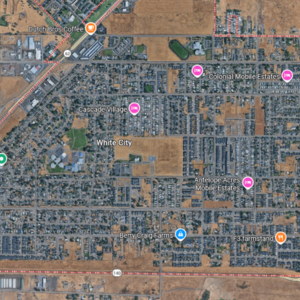
- White City
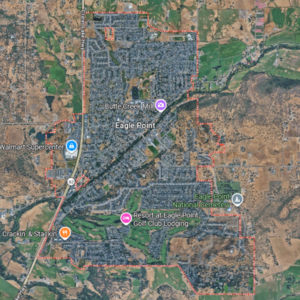
- Eagle Point
- Central Point
- Table Rock
- Agate Desert
- Agate Lake
- Antelope Creek
- Tolo
- Seven Oaks
- Sams Valley
- Medford
- Rural properties along Highway 62
- Farms near Highway 140
- Properties along the Rogue River corridor
Illustrative White City Water Well Drilling Scenario
The following example shows how a typical White City-area project could be planned. It is an illustrative scenario and is not presented as a completed Enloe customer project.
Imagine a property owner developing rural acreage east of White City. The plans include a three-bedroom home, a small greenhouse, a workshop and water for several cattle. The parcel lies beyond the nearest public-water main.
Nearby well reports show several wells completed in valley sediments, but their depths and production rates vary. The parcel also contains clay-rich soil and an area of seasonal ponding that must be evaluated before selecting the access route and drilling location.
The first step would be to calculate household, greenhouse and livestock demand. The proposed site would then be reviewed for septic setbacks, drainage, overhead power lines and adequate space for the rig.
Suppose drilling reaches a productive gravel zone capable of supporting the household and livestock but not the greenhouse’s full peak watering demand. A storage tank could collect water throughout the day, while drip irrigation is divided into smaller scheduled zones.
This design would keep pumping within the well’s tested production rate and provide reserve capacity for household use. It demonstrates why water demand, storage, pump selection and irrigation efficiency matter as much as completed depth.
Images of some of our Drilling Projects


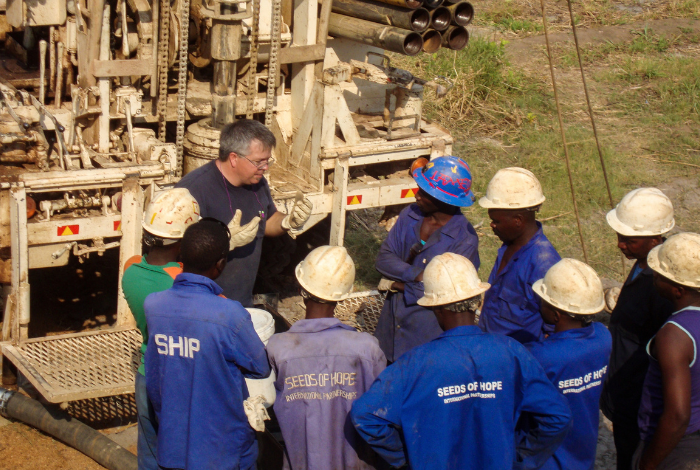
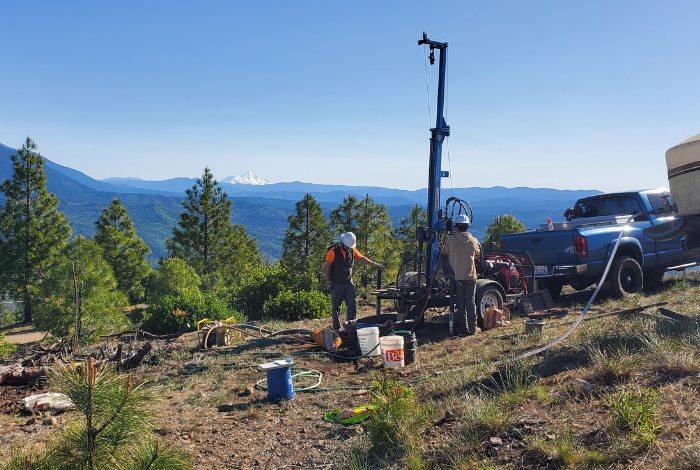
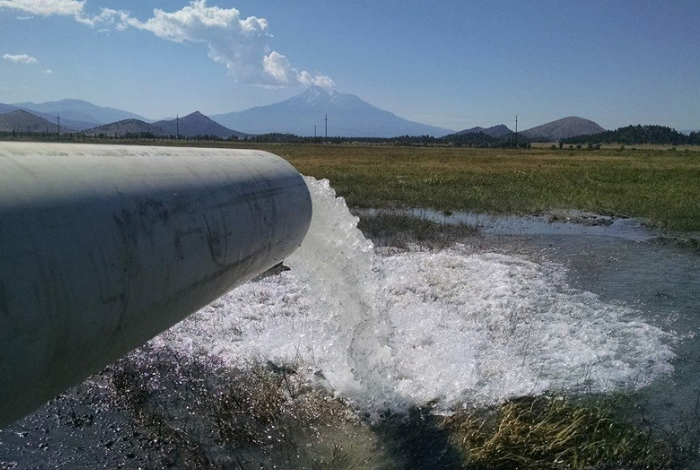
Benefits of Well drilling in White City, Oregon
White City wells may encounter dense clay, loose valley gravel, hard cobbles, cemented sediment and fractured volcanic rock. Experience with these changing formations helps the drilling team adjust casing and construction decisions as the actual underground conditions become known.
Choosing Enloe Drilling & Pumps provides several practical advantages:
- Multigenerational water well drilling experience
- Knowledge of Southern Oregon valley and volcanic geology
- Planning informed by nearby Oregon well reports
- Residential, agricultural, commercial and industrial capabilities
- Well development, production testing and pump services
- Storage solutions for moderate or variable production
- Access planning for farms and undeveloped parcels
- Clear explanations of depth, yield and equipment options
We do not guarantee a fixed depth or pumping rate before drilling begins. We review the available records, identify likely conditions and prepare a practical plan. Final construction and equipment decisions are based on the geology and production encountered.
Your questions answered
FAQ About Water Well Drilling in White City, Oregon
What is the typical water well depth near White City?
Aggregated Oregon well records for the 97503 area indicate a median completed depth of approximately 120 feet. Many wells fall within a broad range of about 80 to 200 feet. Properties with thick clay or low-producing rock may require depths of 300 feet or more.
Can I drill a private well if Medford Water serves White City?
That depends on the property, the availability of public water and applicable development requirements. Medford Water directly serves many White City properties, but some rural parcels remain outside the distribution network. Confirm service availability before planning a private well.
Does seasonal water on Agate Desert land indicate a productive aquifer?
No. Seasonal ponding may result from dense clay or hardpan that prevents surface water from draining quickly. A dependable well must reach a formation capable of transmitting enough groundwater throughout the year.
Do I need a water right for commercial or agricultural pumping?
Many commercial, industrial and larger irrigation uses require an Oregon water right. A well can be physically productive without being legally authorised for every proposed use. Confirm the intended use with the Oregon Water Resources Department before drilling.
How should I prepare a White City property for a drilling rig?
Provide a stable access route with sufficient width, height and turning space. Mark septic components, sewer lines, irrigation pipes and utilities. Address soft soil, seasonal ponding, culverts and wetland restrictions before equipment is mobilised.
Locations in Oregon we Service
5 Interesting Facts About White City, Oregon
- White City is not an incorporated city. It is an unincorporated community and census-designated place governed by Jackson County rather than its own city council.
- The community developed around a major World War II training base. Camp White opened in 1942 and trained thousands of soldiers for combat before closing after the war.
- White City is home to rare vernal pool habitats. Seasonal wetlands in the Agate Desert support unusual plants and animals adapted to pools that fill during wet weather and dry out during summer.
- The Table Rocks dominate the surrounding landscape. Upper and Lower Table Rock rise above the Rogue Valley near White City and are remnants of an ancient volcanic lava flow.
- White City receives municipal water directly from Medford Water. The community’s public supply comes primarily from Big Butte Springs, with treated Rogue River water available to meet higher seasonal demand.
Read Our Latest Blogs
How Much Water Does Your Average Well Produce?
In our regional experience at Enloe Drilling & Pumps Inc., residential wells commonly produce around 5 to 15 gallons per minute, or GPM. However, this

How Deep Does a Water Well Need to Be?
If there is one question every homeowner asks before drilling a water well, it is, “How deep does it need to be in Southern Oregon?”

Is an 80 Foot Well Deep Enough for My Property?
One of the most common questions I hear from homeowners is, “Is an 80-foot well deep enough for my property?” My answer usually surprises them.
Get in Touch
For all your water well drilling and pump needs contact us today
Address
507 Hummingbird Lane, Talent, OR 97540
Enloedrillingandpumps@gmail.com
Call Us
530-964-2807