Water Well Drilling in Eagle Point Oregon
Call us TODAy
✓ Call Your Local Well Drilling Experts
✓ Request a Free Drilling Quote
✓ Plan Your Well With Local Experience
✓ Start Your Water Well Project Today
Water Well Drilling
Developing a dependable water well near Eagle Point requires careful planning. Properties in this part of Jackson County may sit on creek deposits, broad agricultural terraces, rolling foothills or volcanic formations extending toward the Cascade Range. The ground beneath a rural homesite near Little Butte Creek can differ considerably from conditions around Lake Creek, Brownsboro or the hills east of town.
Enloe Drilling & Pumps provides professional water well drilling in Eagle Point, Oregon for homeowners, ranchers, farmers and commercial property owners. Our multigenerational team considers nearby Oregon well reports, local geology, site access and expected water demand before recommending a drilling approach.
The City of Eagle Point purchases treated water from the Medford Water Commission and distributes it through the municipal system. Private wells are more common outside the city’s water-service area, particularly on rural residential parcels, farms, ranches and undeveloped land.
Local Geology and Drilling Conditions in Eagle Point
Eagle Point lies where the Rogue Valley meets the western foothills of the Cascade Range. Local drilling may encounter stream-deposited sand and gravel, clay-rich sediments, weathered volcanic material, cemented conglomerate and hard fractured bedrock.
Groundwater can occur within permeable gravel layers, weathered rock or fractures in volcanic formations. The thickness and productivity of these water-bearing zones may change significantly across a relatively short distance.
Little Butte Creek Valley Deposits
Properties near Little Butte Creek and its tributaries may contain layers of sand, gravel, silt, clay and rounded cobbles. These materials were deposited as waterways shifted across the valley over long periods.
Coarse sand and gravel can transmit useful amounts of groundwater when the deposits are thick, saturated and connected to a dependable recharge source. Fine silt and clay may hold moisture but release it too slowly to provide the pumping rate required by a home or agricultural operation.
Loose formations can collapse into an open borehole or allow sediment to enter the completed well. Depending on the material encountered, additional casing, a properly selected well screen and thorough development may be needed to produce clear water.
Shallow groundwater near livestock areas, septic systems and agricultural land may also face a greater contamination risk. Correct well placement and an effective sanitary seal help protect the water supply from surface runoff and shallow pollutants.
Rolling Terraces and Foothill Properties
Rural parcels outside Eagle Point may sit on elevated terraces containing older gravel, clay and weathered rock. These deposits are often more compact than the younger material beside Little Butte Creek.
Drilling conditions can alternate between sticky clay, cemented gravel and boulders. A shallow water-bearing layer may provide limited seasonal water but decline during the dry summer months. Deeper drilling may be necessary to locate a more reliable formation or provide adequate water storage within the well.
Sloping ground also affects site preparation. Surface water must drain away from the completed wellhead, and the drilling pad must be stable enough to support heavy equipment.
Volcanic Rock Toward the Cascade Foothills
Properties east and northeast of Eagle Point may encounter volcanic rock associated with the western Cascade foothills. These formations can include weathered volcanic material, dense lava, ash-rich deposits and fractured basalt or andesite.
Solid volcanic rock does not store water evenly. Groundwater generally travels through cracks, joints and contacts between separate rock layers. A productive fracture can provide a useful supply, while a nearby borehole may pass through dense rock with limited water production.
Hard rock can reduce drilling speed and increase the importance of identifying several water-bearing fractures. The final depth should be based on actual production, recovery and available water-column storage rather than the first indication of moisture.
Typical Water Well Depths in Eagle Point
Oregon well records for the 97524 area show considerable variation in completed depths. Aggregated records indicate a median depth of approximately 200 feet, with many wells falling between about 120 and 300 feet.
Some wells in favourable creek or valley deposits may be completed at shallower depths. Rural foothill properties can require drilling beyond 300 feet when productive fractures are widely spaced or when additional depth is needed to create a dependable water column.
These figures are planning references rather than guaranteed drilling depths. Even neighbouring properties can produce different results because underground gravel channels and rock fractures do not follow property boundaries.
Before preparing an Eagle Point drilling plan, we consider:
- Oregon well reports for surrounding properties
- Recorded well depths, static water levels and flow rates
- The parcel’s elevation, slope and position within the valley
- Distance from Little Butte Creek and local drainage channels
- The presence of clay, gravel, boulders or volcanic bedrock
- Seasonal groundwater changes and drought conditions
- Nearby domestic, livestock and irrigation pumping
- The owner’s required daily volume and peak flow
- Septic systems, animal areas and possible contamination sources
- Space for pumps, pressure equipment and storage tanks
A nearby well report can help establish realistic expectations, but it cannot predict an exact depth or flow rate. The final construction decision should reflect the geology and water production encountered during drilling.
Residential and Agricultural Water Requirements
Residential Water Wells Near Eagle Point
A residential water well may need to supply bathrooms, laundry, kitchen appliances, outdoor faucets and landscape watering. Rural households may also require water for workshops, guest units, gardens, horses, poultry or emergency fire storage.
The pumping system must accommodate periods of peak use. Morning showers, laundry and outdoor watering can place several demands on the system at the same time.
A moderate-producing well may still support a household when the system includes adequate storage. The well can refill a storage tank at a sustainable rate while a separate booster pump supplies the home during short periods of greater demand.
Benefits of a correctly designed residential well system include:
- An independent water source for qualifying rural properties
- A pump matched to the well’s tested performance
- Storage solutions for wells with moderate recovery rates
- Reserve capacity for periods of heavier household use
- Water planning for gardens and limited livestock
- Reduced pump cycling and unnecessary equipment wear
- Accessible components for future maintenance and repairs
New well water should be tested before it is used regularly for drinking or cooking. Testing may include total coliform bacteria, nitrate, arsenic and other substances associated with the property’s geology or surrounding land uses.
Agricultural and Livestock Wells Near Eagle Point
The countryside around Eagle Point supports cattle, horses, hay fields, pasture, orchards, vineyards and specialty agriculture. These activities can require far more water than an ordinary household, especially during Southern Oregon’s hot and dry summers.
An agricultural drilling plan should begin with the intended use. Stock troughs, a small orchard and several acres of irrigation each require different pumping rates, storage volumes and distribution systems.
Oregon allows certain exempt groundwater uses, including qualifying domestic use and stock watering. Larger irrigation, commercial and industrial uses generally require a water right from the Oregon Water Resources Department.
A completed well report confirms how the well was constructed and tested. It does not automatically authorise unlimited irrigation. Property owners should confirm water-right requirements before drilling or expanding an agricultural operation.
Access Considerations for Rural Eagle Point Properties
Eagle Point-area properties range from open valley parcels to wooded foothill homesites. Access that appears suitable for a pickup or livestock trailer may not support a drilling rig, water truck and casing-delivery vehicle.
Clay soil can become soft after rain, snowmelt or irrigation. Narrow ranch roads may include weak culverts, tight gates, steep grades and limited turning areas.
Before mobilisation, we evaluate:
- Driveway width, grade and road surface
- Gate openings and space for large vehicles to turn
- Bridge, cattle-guard and culvert capacity
- Soft soil, creek crossings and seasonal drainage
- Irrigation pipes, ditches and underground utilities
- Overhead electrical lines and low tree branches
- Space for the rig, support truck and drilling materials
- Wildfire damage, fallen timber and winter access conditions
- Required separation from septic and livestock facilities
- Permanent access for pump installation and future servicing
Road improvements may be required before equipment arrives. This can include trimming branches, widening a gate, reinforcing a culvert or adding compacted rock to soft sections.
The completed well should remain accessible throughout its service life. Placing the well behind a future building, inside a livestock pen or beneath overhead utilities can make pump repairs and well maintenance unnecessarily difficult.
Oregon Well Permits and Construction Requirements
Water well construction near Eagle Point is primarily regulated by the Oregon Water Resources Department. A licensed and bonded Oregon water well constructor normally performs the drilling, submits the required start card and files a completed well report.
Oregon construction standards address approved casing, sanitary seals, wellhead protection and separation from possible contamination sources. The well location must be coordinated with the septic tank, drainfield, replacement drainfield, sewer lines, animal enclosures and chemical-storage areas.
A water-supply well generally must remain at least 100 feet from a septic drainfield or sewage-disposal facility unless an approved exception applies. Other separation distances may apply to septic tanks, sewer lines and contamination sources.
Jackson County septic requirements are administered through the appropriate local and Oregon Department of Environmental Quality processes. Planning the well and septic system together can prevent conflicts that limit the usable area of the property.
The normal process includes:
- Confirming whether Eagle Point municipal water is available
- Defining the proposed domestic, livestock or irrigation use
- Determining whether an Oregon water right is required
- Reviewing nearby well reports and local geological conditions
- Selecting a site that meets current separation requirements
- Coordinating the well location with the septic plan
- Preparing a stable drilling pad and equipment-access route
- Submitting the required well-construction notification
- Installing approved casing and sanitary seals
- Developing and evaluating the completed well
- Selecting the pump, controls and storage equipment
- Filing the required well report and recording documents
Construction rules, water-right requirements and fees can change. Property owners should confirm current procedures with the Oregon Water Resources Department, Oregon DEQ, Jackson County and the City of Eagle Point when applicable.
Communities We Serve Near Eagle Point
Our Eagle Point water well drilling service includes qualifying properties in and around:
- Eagle Point
- White City
- Lake Creek
- Brownsboro
- Shady Cove
- Trail
- Butte Falls
- Sams Valley
- Agate Desert
- Antelope Creek Valley
- Rural properties along Highway 62
- Properties near Little Butte Creek
- Farms along Highway 140
- Foothill properties east of Eagle Point
Illustrative Eagle Point Water Well Drilling Scenario
The following example shows how a typical Eagle Point-area project could be approached. It is an illustrative scenario and is not presented as a completed Enloe customer project.
Consider a family purchasing a rural parcel northeast of Eagle Point. Their plans include a four-bedroom home, a barn, six horses, a vegetable garden and a small irrigated pasture. The parcel lies beyond the city’s municipal water network.
Nearby well reports show completed depths ranging from moderate valley wells to deeper foothill wells. The proposed drilling location must also avoid the septic drainfield, barnyard runoff and an existing fuel-storage area.
The first step would be to estimate household, livestock and irrigation demand. The access road would then be checked for width, grade, overhead clearance and a culvert that must support the drilling equipment.
If drilling produced a reliable but moderate flow, the system could include a storage tank that fills gradually. Household use and livestock watering could receive priority, while the pasture is irrigated in smaller zones during off-peak periods.
This approach protects the well from excessive pumping and helps the owner use the available water efficiently. It also demonstrates why production testing, storage, pump sizing and irrigation scheduling are as important as completed depth.
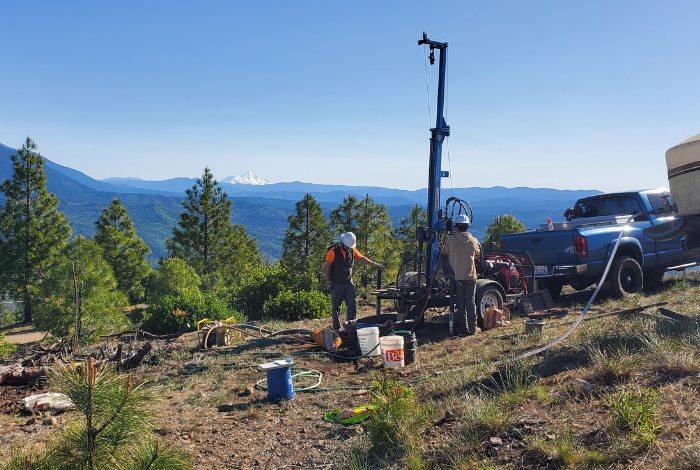
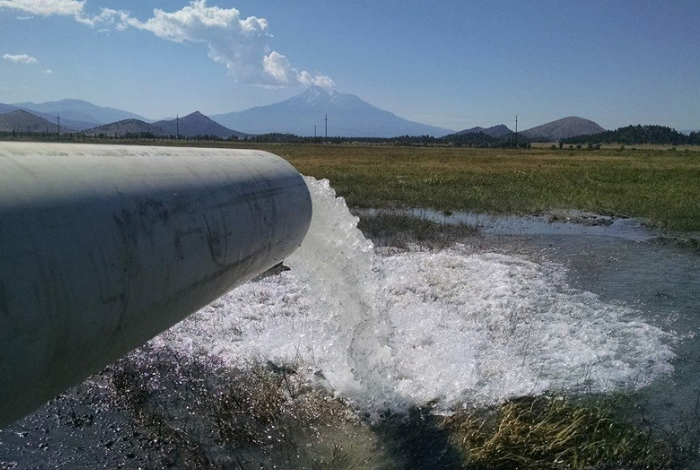
Images of some of our Drilling Projects



Benefits of Well drilling in Eagle Point, Oregon
Eagle Point wells may pass through loose creek gravel, hard cobbles, clay-rich terraces and fractured volcanic rock. Experience with these changing formations helps the drilling team adapt the construction plan as actual underground conditions become known.
Choosing Enloe Drilling & Pumps provides several practical advantages:
- Multigenerational water well drilling experience
- Knowledge of Southern Oregon valley and foothill geology
- Planning informed by nearby Oregon well records
- Residential, agricultural and commercial drilling capabilities
- Well development, production testing and pump services
- Storage solutions for wells with moderate production
- Practical preparation for ranches and hillside properties
- Clear explanations of depth, flow and equipment options
We do not promise a specific drilling depth or water yield before the property has been drilled. We use the available records and site information to establish a practical plan, then base the completed system on the conditions encountered.
Your questions answered
FAQ About Water Well Drilling in Eagle Point Oregon
What is the typical water well depth near Eagle Point?
Aggregated records for the 97524 area indicate a median completed depth of approximately 200 feet. Many wells fall between about 120 and 300 feet, although some foothill and fractured-rock properties require depths beyond 300 feet. These figures are planning ranges and not guaranteed results.
Can I install a private well inside Eagle Point?
That depends on the parcel, municipal water availability and local development requirements. The City of Eagle Point purchases treated water from the Medford Water Commission and distributes it within its service area. Confirm service availability before planning a private well.
Will a property near Little Butte Creek have a shallow well?
Not necessarily. Creek-valley deposits may contain shallow groundwater, but the formation must also transmit enough water and provide acceptable quality. Additional depth may be needed to reach productive gravel or create sufficient water-column storage.
Do I need a water right for pasture or orchard irrigation?
Larger agricultural irrigation normally requires an Oregon water right. Drilling a productive well does not automatically authorise unrestricted irrigation. Confirm the intended use with the Oregon Water Resources Department before construction begins.
How should I prepare a rural Eagle Point property for drilling?
Provide a stable route with enough width, height and turning space for heavy equipment. Mark septic components, irrigation pipes, underground utilities and drainage channels. Check gates, culverts and cattle guards, and reinforce soft road sections when necessary.
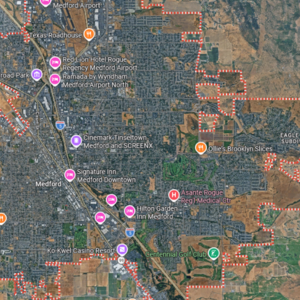
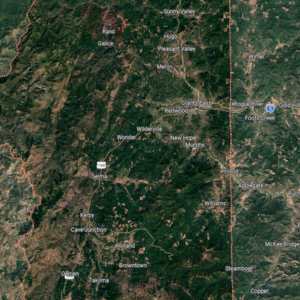
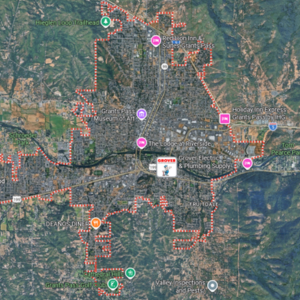
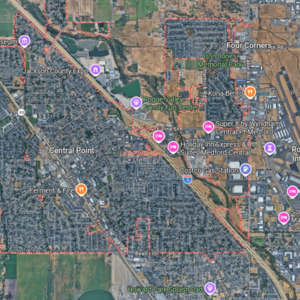
Locations in Oregon we Service
5 Interesting Facts About Eagle Point, Oregon
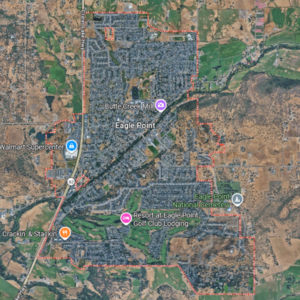
- Eagle Point is known as the Gateway to the Lakes. The city provides convenient access to Crater Lake, Lost Creek Lake, Fish Lake and several outdoor destinations in the Southern Cascade Mountains.
- The historic Butte Creek Mill was established in 1872. Originally called the Snowy Butte Mill, it is one of the few remaining water-powered grist mills in the western United States.
- The community was once called the Food Basket of the Rogue Valley. During the 1850s, local farms supplied fruit, grain, vegetables and livestock products to growing settlements throughout the region.
- A historic covered bridge crosses Little Butte Creek. Built in 1922, the Antelope Creek Bridge was relocated to Eagle Point during the 1980s and now provides a pedestrian route across the creek.
- Eagle Point has a championship golf course. The Eagle Point Golf Club features an 18-hole course designed by renowned golf course architect Robert Trent Jones Jr.
Read Our Latest Blogs

How Often Should I Test My Well Water?
If your home, farm, or business relies on a private well, you should test the water every year for bacteria and nitrates. In Southern Oregon,

What Are the Signs That a Well Pump Is Failing and Needs to Be Replaced?
A failing well pump rarely stops working without warning. In most cases, the system gives you several clues first. You may notice fluctuating water pressure,

Do I Need a Permit to Drill a Water Well?
You need to check the applicable well-construction requirements before drilling a water well. In Northern California, you must obtain a well permit from the local
Get in Touch
For all your water well drilling and pump needs contact us today
Address
507 Hummingbird Lane, Talent, OR 97540
Enloedrillingandpumps@gmail.com
Call Us
530-964-2807