Professional Water Well Drilling Company in McCloud CA
Call us TODAy
✓ Call Your Local Well Drilling Experts
✓ Request a Free Drilling Quote
✓ Plan Your Well With Local Experience
✓ Start Your Water Well Project Today
Water Well Drilling Company
Planning a dependable water well in McCloud requires an understanding of volcanic geology, mountain groundwater and the challenges of working on forested land. McCloud sits on the southern side of Mount Shasta, where snowmelt moves through lava flows, fractures, volcanic gravel and other porous deposits. These conditions can create productive groundwater sources, but water is not distributed evenly beneath every property.
Enloe Drilling & Pumps provides professional water well drilling in McCloud, CA for rural homeowners, ranch properties, commercial developments and landowners outside established utility boundaries. Our multigenerational team considers nearby well records, geological conditions, road access and your long-term water requirements before recommending a drilling plan.
Most properties within the established community receive water from the McCloud Community Services District. The district supplies the town from three groundwater springs known as Intake, Upper Elk and Lower Elk. Private wells may be needed for qualifying properties outside the district’s service area or where a connection is not available.
Local Geology and Drilling Conditions in McCloud
McCloud’s underground water system was shaped by volcanic activity at Mount Shasta. The area contains layers of lava, volcanic ash, cinders, sand, gravel and material carried by streams and glacial activity. These formations differ in hardness and their ability to store or transmit groundwater.
A drilling project may pass through loose volcanic soil before reaching dense lava. Another property may contain several layers of porous gravel and broken volcanic rock. The depth and performance of a finished well depend on which formations are present and whether their openings are connected to a dependable recharge system.
Vesicular Lava and Volcanic Gravel
USGS groundwater studies identify sand and gravel beneath vesicular lava flows as an important groundwater source near McCloud. Vesicular lava contains openings formed by gas bubbles when the lava cooled. Fractures and spaces between separate flows can also create paths for water.
Groundwater may collect in coarse deposits below a less permeable lava layer. When a borehole reaches one of these zones, water can enter through the surrounding gravel, broken rock and connected fractures.
The presence of volcanic rock does not guarantee a high-producing well. Dense sections of lava may provide little water, while a fractured contact between two flows can produce a much stronger supply. Small changes in drilling location can therefore affect the final depth and yield.
Lava Tubes, Fractures and Cooling Joints
Lava contracts as it cools, creating joints and cracks. Larger underground channels, including lava tubes, can also develop within volcanic terrain. These features allow rain and snowmelt to move below the surface and contribute to springs and aquifers.
A connected fracture may provide useful groundwater, but an isolated crack may offer only a temporary inflow. Production testing helps determine whether the water-bearing feature can recover after pumping rather than relying on the first flow observed during drilling.
Fractured rock also requires careful well construction. Casing and sanitary seals must prevent shallow runoff or contaminated surface water from travelling down the outside of the borehole.
Snowmelt and Mountain Recharge
McCloud receives substantial winter precipitation compared with the drier Shasta Valley. Snow and rain soak into permeable volcanic deposits instead of remaining entirely on the surface. Water can then travel through the mountain before emerging at springs or entering deeper formations.
This underground storage helps support McCloud’s well-known spring system. However, groundwater flow paths can be complicated. Elevation, rock type, fracture direction and seasonal recharge all influence how much water is available beneath an individual property.
Typical Water Well Depths in McCloud
Nearby well records provide useful information when planning a McCloud water well. They can show total depths, static water levels, geological materials and reported production. They cannot predict the exact result of a new borehole because volcanic formations can change considerably between properties.
A regional agency report that reviewed 19 domestic well logs in the McCloud area found an average completed depth of approximately 120 feet. The same records showed an average static water level of about 34 feet below ground surface. This was a limited group of wells, so the figures should be treated as local reference points rather than guaranteed results.
Other records from the wider 96057 ZIP Code include considerably deeper wells. For practical planning, a domestic project near McCloud may initially consider a broad range of approximately 100 to 250 feet. Some properties may find an adequate supply at less than 100 feet, while difficult volcanic or elevated sites may require drilling beyond 250 or 300 feet.
Static water level is not the same as total well depth. Water may rise within the casing after a deeper formation is reached. The amount of available water and the formation’s recovery rate are more important than the water level alone.
Before developing a McCloud drilling plan, we consider:
- California well completion reports near the property
- Recorded well depths and static water levels
- Reported yields and available pump-test information
- The parcel’s elevation and position relative to Mount Shasta
- Known lava flows, fractures and volcanic gravel deposits
- Seasonal snowmelt and groundwater recharge
- The property’s daily and peak water requirements
- Available space for a pump house and storage equipment
A well should not stop at a predetermined number simply because another property found water at that depth. Drilling decisions should respond to the actual formations, water entries and production encountered beneath the site.
Residential and Agricultural Water Requirements
Residential Water Wells in McCloud
A rural residential well may need to supply bathrooms, laundry, appliances, outdoor faucets, a workshop and seasonal landscaping. Guest cabins, holiday accommodation and accessory dwellings can increase demand, especially when several people use water simultaneously.
The pumping system should be selected after the well is developed and tested. An oversized pump can remove water faster than the formation can replace it. This may lower the water level, cause pump cycling and increase the risk of temporarily pumping the well down.
A storage tank can help a moderate-producing well meet short periods of high demand. The well fills the tank at a controlled rate, while a separate pressure pump supplies the building when several fixtures are used.
Benefits of a properly designed residential well system include:
- A private supply for qualifying properties outside the district
- A pump matched to the well’s tested production
- Storage options for moderate or variable recovery
- Water planning for homes, workshops and guest accommodation
- Equipment designed for freezing mountain temperatures
- Documented construction for future repairs and property sales
- Accessible components for ongoing pump maintenance
New well water should be tested by a qualified laboratory before regular household use. Clear mountain groundwater can still contain bacteria, metals, minerals or naturally occurring substances that cannot be identified by appearance or taste.
Livestock, Garden and Commercial Water Wells
Rural parcels around McCloud may need water for horses, small livestock operations, gardens, greenhouses, cabins or commercial facilities. Each use has different daily volumes and peak flow requirements.
Livestock water planning should account for the number of animals, summer temperatures and the distance to troughs. Greenhouses and gardens require seasonal calculations based on the planted area, irrigation method and watering schedule.
Lodging and commercial properties may experience concentrated morning and evening demand. Fire-protection storage, food service, laundry and guest occupancy can increase the total system size. These requirements should be identified before the well and pump are designed.
A drilling permit authorises well construction, but it does not automatically approve every proposed business, agricultural or water use. Larger projects may require additional land-use, environmental, water-right or public-water-system review.
Access Considerations for Rural McCloud Properties
McCloud’s forested setting can make equipment access one of the most important parts of the project. Narrow roads, steep grades, deep snow and low branches may prevent a drilling rig from reaching an otherwise suitable well location.
A rig requires a stable route, adequate overhead clearance and enough space to turn and work safely. Support vehicles must also reach the site with casing, tools, fuel and drilling materials.
Before mobilising equipment, we assess:
- Road width, slope and surface stability
- Low branches and overhead utility lines
- Gate openings and sharp forest-road turns
- Bridge and culvert weight limitations
- Snowbanks, ice and seasonal road closures
- Soft ground during spring snowmelt
- Tree clearance around the drilling location
- Space for the rig, support trucks and casing
- Wildfire restrictions and defensible working space
- Permanent access for pump removal and well service
A gravel road that works for a pickup may not support a loaded drilling rig. Soft shoulders, buried drainage pipes and small culverts should be checked before equipment arrives. Road improvements or tree trimming may be necessary.
The work pad should be reasonably level and clear of buildings, septic components and buried utilities. Winter projects may also require snow removal and sanding before heavy vehicles can safely enter the property.
California Well Permits and Construction Requirements
Siskiyou County Environmental Health reviews and permits domestic, agricultural, monitoring and exploratory wells in the McCloud area. A permit is generally required before drilling a new well or deepening, altering, repairing or properly destroying an existing well.
Before applying, determine whether the parcel can connect to the McCloud Community Services District. Properties inside the service area may already have access to the district’s spring-fed water system. District rules and county approval can affect whether a private well is appropriate.
The proposed well location must comply with current separation requirements. Review may include septic tanks, disposal fields, sewer lines, fuel tanks, drainage routes, animal areas and other possible contamination sources.
California well standards and Siskiyou County requirements address casing, approved materials, annular seals, surface drainage and protection of water-bearing formations. The wellhead should be constructed so that snowmelt, runoff and contaminants cannot enter the system.
The work must be performed by a contractor with the appropriate California license. The county may require advance notice before the sanitary seal is installed so an inspection can be arranged. The driller must also submit the required well completion documentation.
The normal process includes:
- Confirming district water availability
- Defining the property’s intended water use
- Reviewing nearby well records and volcanic geology
- Selecting a location that satisfies required setbacks
- Submitting the Siskiyou County permit application
- Preparing the forest road and drilling pad
- Drilling through the local volcanic formations
- Installing casing and the required sanitary seal
- Developing and testing the completed well
- Selecting a suitable pump and storage system
- Testing water quality and filing completion records
Permit fees, application forms and inspection procedures can change. Confirm current requirements with Siskiyou County Environmental Health and the McCloud Community Services District before scheduling the work.
Communities We Serve Near McCloud
Our McCloud water well drilling service includes qualifying properties in and around:
- McCloud
- Mount Shasta
- Dunsmuir
- Castella
- Weed
- Lake Shastina
- Squaw Valley Road and surrounding rural areas
- McCloud River properties
- Highway 89 corridor properties
- Rural parcels near Pilgrim Creek Road
- Forested properties south and east of Mount Shasta
Illustrative McCloud Water Well Drilling Scenario
The following example shows how a typical McCloud-area project could be planned. It is an illustrative scenario and is not presented as a completed Enloe customer project.
Imagine a property owner developing a forested parcel several miles outside McCloud. The plans include a three-bedroom home, a detached workshop, a guest cabin and two horses. The property is beyond the practical reach of the community water system and requires an approved private well.
The first step would be to estimate the combined household, guest and livestock demand. Nearby completion reports would help establish a planning range, while geological information would indicate that the borehole may encounter lava, fractured volcanic rock and gravel deposits.
The existing forest road would also require inspection. Low branches would need trimming, and a narrow corner might need widening so the rig could enter and leave safely. The owner would need to select a drilling area that remains accessible after heavy snow.
Suppose the completed well provided a steady domestic supply but could not meet the home, guest cabin and livestock demand at the same moment. The system could use a storage tank installed in a protected location. Water would accumulate between busy periods, and a correctly sized pressure pump would supply the buildings and troughs.
This approach would allow the owner to use the well within its tested capacity. It also demonstrates why road preparation, snow access, storage, pump selection and frost protection are all essential parts of a McCloud water project.
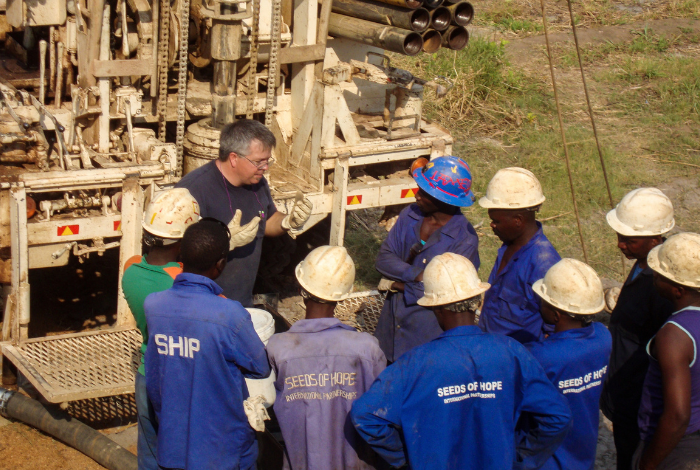
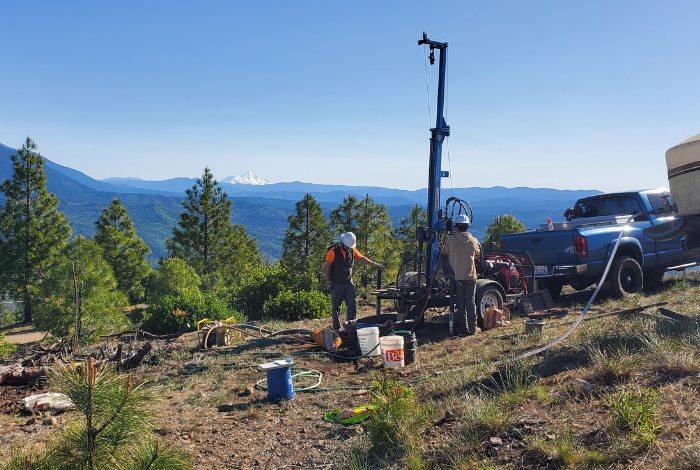
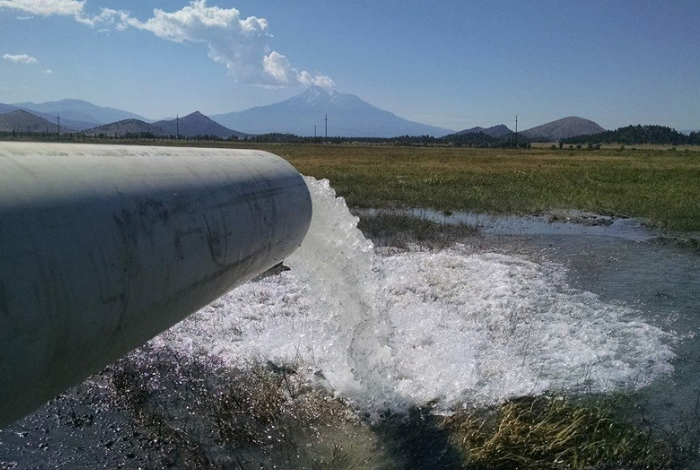
Images of some of our Drilling Projects


Benefits of Well drilling in McCloud, CA
McCloud’s volcanic formations and mountain access require more than a standard drilling approach. The well must be planned around the geology, site elevation, winter weather and the property’s complete water system.
Choosing Enloe Drilling & Pumps provides several practical advantages:
- Multigenerational water well drilling experience
- Knowledge of Northern California volcanic formations
- Planning informed by nearby well completion reports
- Domestic, livestock and commercial drilling capabilities
- Well development, production testing and pump services
- Storage solutions for moderate-producing wells
- Access planning for forested and snow-prone properties
- Clear explanations of depth, yield and system options
We do not guarantee that a well will reach water at the local average depth. Instead, we prepare for the likely formations, explain the uncertainties and base the final pump system on measured well performance.
Your questions answered
FAQ About Water Well Drilling in McCloud, CA
What is the typical water well depth near McCloud?
A review of 19 domestic well logs in the McCloud area found an average completed depth of approximately 120 feet and an average static water level of about 34 feet. The wider area includes deeper wells, so many projects may use a broad planning range of roughly 100 to 250 feet. Actual depth depends on the formations and groundwater found beneath the property.
Do properties in McCloud need private water wells?
Many properties in the established community receive spring water from the McCloud Community Services District. Private wells are more likely on qualifying rural parcels outside the district’s service area. Confirm connection availability and well eligibility before applying for a permit.
How does volcanic rock affect drilling near McCloud?
Groundwater can move through fractures, cooling joints, lava tubes and gravel beneath lava flows. Some openings produce useful quantities of water, while dense volcanic rock may provide very little. This can cause neighboring wells to have different depths and yields.
Can I drill a water well during winter?
Winter drilling may be possible when the road and work area are safe and accessible. Deep snow, ice, frozen ground and unplowed forest roads can delay equipment mobilisation. Scheduling during drier months may reduce access preparation, but every site must be evaluated individually.
How should I prepare a forested property for the drilling rig?
Provide a stable road with adequate width, height and turning space. Remove low branches, identify buried utilities and septic areas, check culverts and prepare a reasonably level work pad. The wellhead should remain accessible after construction for future pump service.
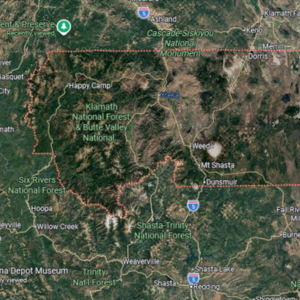
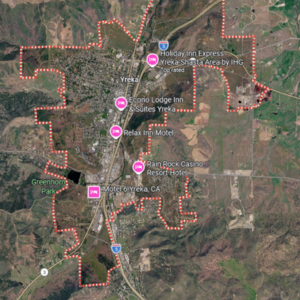
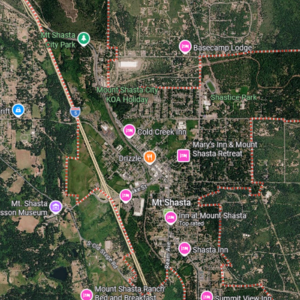
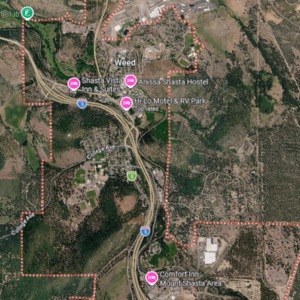
Locations in California we Service
5 Interesting Facts about McCloud, CA
- McCloud developed as a company-owned lumber town. A major lumber mill and railroad helped the community grow during the late 1800s. The mill once supplied local homes with electricity and steam heat.
- Part of downtown McCloud is nationally recognized. The community’s historic district appears on the National Register of Historic Places, preserving buildings connected to its railroad and timber history.
- McCloud’s public water comes from three groundwater springs. The McCloud Community Services District uses Intake, Upper Elk and Lower Elk springs, all located north of town.
- Volcanic geology helps create the area’s groundwater supply. Snowmelt can soak into porous lava, gravel and fractured volcanic rock before reappearing in springs or entering underground aquifers.
- The nearby McCloud River has three famous waterfalls. The river flows across basaltic lava formations to create Lower, Middle and Upper McCloud Falls, making the area popular for hiking, fishing and sightseeing.
Read Our Latest Blogs
What Happens If My Water Well Runs Dry?
If your water well runs dry, the first thing you should do is switch off power to the well pump and stop using water. Continuing

Is an 80 Foot Well Deep Enough for My Property?
One of the most common questions I hear from homeowners is, “Is an 80-foot well deep enough for my property?” My answer usually surprises them.

What Questions Should I Ask Before Hiring a Well Driller?
Most homeowners think hiring a well driller is as simple as collecting three quotes and choosing the lowest price. After years in the drilling industry,
Get in Touch
For all your water well drilling and pump needs contact us today
Address
2301 S Mt Shasta Blv, Mt Shasta CA 96067
Enloedrillingandpumps@gmail.com
Call Us
541-841-4124