Water Well Drilling in Yreka, CA
Call us TODAy
✓ Call Your Local Well Drilling Experts
✓ Request a Free Drilling Quote
✓ Plan Your Well With Local Experience
✓ Start Your Water Well Project Today
Water Well Drilling
Drilling a reliable water well in Yreka requires a clear understanding of the Shasta Valley, nearby groundwater records and the amount of water your property will need. Conditions around Yreka can vary between valley-floor parcels, agricultural land east of town, foothill properties and remote acreage toward Hornbrook or the Klamath River.
Enloe Drilling & Pumps provides water well drilling in Yreka, CA for rural homeowners, farmers, ranchers and commercial property owners. Our multigenerational team combines local drilling experience with nearby well records, property access, groundwater conditions and your long-term water requirements.
Local Geology and Drilling Conditions in Yreka
Yreka sits near the northern end of the Shasta Valley. The local groundwater system reflects a complex mix of valley sediments, volcanic deposits, older bedrock and material transported from the surrounding uplands. These formations influence how groundwater moves, how deep a well may need to be and how much water it can produce.
Valley-Floor Properties Around Yreka
Properties on the flatter land around Yreka may contain layers of clay, silt, sand, gravel and weathered volcanic material. Water-bearing sand and gravel can provide useful groundwater, but these layers are not continuous across the entire area.
A drilling crew may pass through several changes in material before reaching a formation capable of supplying dependable water. Loose or unstable layers may also require careful casing and sealing to protect the well and prevent surface contamination from moving down the borehole.
Volcanic Influence From the Shasta Valley
Mount Shasta and older volcanic activity have shaped much of the wider valley. Basalt, volcanic debris and fractured rock occur throughout the region. Fractures and open spaces in volcanic formations can carry significant groundwater, but productivity can change over short distances.
A nearby property may have a productive well while another parcel requires deeper drilling. This variation is one reason that nearby records are useful for planning but cannot guarantee a specific result.
Foothill and Bedrock Properties
Properties west or north of Yreka may encounter shallower soil over weathered or fractured bedrock. In these areas, groundwater is often associated with joints, fractures and zones where the rock has broken down over time.
Bedrock drilling can be slower than drilling through softer valley material. The well may also need to continue beyond the first sign of water to create enough available water column or intersect additional productive fractures.
Typical Water Well Depths in Yreka
Local well data provides a useful starting point for estimating possible drilling conditions. However, a recorded depth is not the same as a recommended depth for your property. Every well must be evaluated according to its location, geology, static water level, production and intended use.
Available Shasta Valley groundwater data shows that domestic wells in the Yreka hydrologic subarea have an average depth of approximately 178 feet and a median depth of about 150 feet. The recorded wells used in that dataset range from approximately 20 feet to 660 feet.
In the Yreka East subarea, domestic wells average approximately 158 feet, with a median depth of about 127 feet. Recorded depths range from approximately 32 feet to 485 feet. Irrigation wells in the main Yreka subarea average approximately 152 feet, although the number and purpose of recorded agricultural wells differ from the domestic dataset.
These ranges demonstrate why a fixed-depth estimate can be misleading. Before developing a drilling plan, we review factors such as:
- Nearby California well completion reports
- Average and median depths within the relevant subarea
- Reported well yields and static water levels
- The property’s elevation and position in the valley
- Seasonal groundwater movement and drought exposure
- Nearby domestic, stock and irrigation pumping
- The required daily volume and peak flow rate
- Potential contamination sources and required setbacks
The purpose is not simply to reach the first water encountered. A successful well must provide an appropriate balance between depth, sustainable production, storage, pump performance and the property’s expected demand.
Residential and Agricultural Water Requirements
Residential Water Wells in Yreka
A household well may need to serve drinking water, bathrooms, laundry, appliances, outdoor faucets, landscaping and occasional livestock use. A new home may also require water during construction before normal household use begins.
We consider both average daily consumption and short periods of high demand. Several showers, a washing machine and outdoor watering may operate within the same hour. If the well cannot meet that temporary peak directly, a storage tank and correctly designed pump system may help balance demand.
The advantages of a professionally planned residential well include:
- A private water source designed for your property
- Pump equipment matched to the well’s tested performance
- Storage options when well recovery is moderate
- Improved planning for household and outdoor water use
- Easier long-term maintenance when components remain accessible
- Construction records that document the completed well
Water quality should also be tested before a new well becomes the household’s drinking-water source. A clear appearance does not confirm that the water is free from bacteria, nitrate, minerals or other substances that may require treatment.
Ranch and Agricultural Wells Near Yreka
The rural land surrounding Yreka supports cattle, horses, hay production, gardens and other agricultural activities. Each use creates a different water requirement. Supplying a residence and several horses is very different from continuously irrigating fields during dry summer weather.
Agricultural planning should establish the required gallons per minute, total daily volume, pumping duration and seasonal demand. These figures influence the well diameter, pump capacity, electrical supply, pressure system and possible storage volume.
A productive well does not automatically approve unlimited agricultural pumping. Property owners may need to consider water rights, groundwater management rules and current restrictions applying to the proposed use. These issues should be investigated before investing in a high-demand system.
Access Considerations for Rural Yreka Properties
Many properties outside central Yreka are reached by gravel roads, steep approaches, private easements or ranch tracks. A water well drilling rig is large and heavy. It needs more clearance, stable ground and turning space than a passenger vehicle or pickup.
Before equipment is mobilized, we assess:
- The width and condition of the access road
- Sharp corners, steep grades and restricted entrances
- Soft ground, mud, snow and seasonal drainage
- Overhead electrical lines and low tree branches
- The capacity of bridges, culverts and cattle guards
- Space for the drilling rig and supporting vehicles
- Distance from septic systems and other contamination risks
- Future access for pump installation and well maintenance
Access should be discussed early, especially on undeveloped land. Road grading, vegetation removal or a stable working pad may be needed before drilling starts. Completing this preparation in advance can reduce delays, protect equipment and prevent additional mobilization costs.
California Well Permits and Construction Requirements
Siskiyou County reviews, permits and inspects domestic, agricultural and monitoring wells in the Yreka area. A permit is generally required before constructing a new well or deepening, altering or destroying an existing one.
The proposed location must comply with applicable setbacks and contamination-protection requirements. The review may consider septic tanks, leach fields, sewer lines, livestock areas, fuel storage, property boundaries and other possible pollution sources.
Well construction must follow applicable California standards and Siskiyou County requirements. Depending on the project, these can address casing, the annular sanitary seal, approved materials, surface drainage and protection around the finished wellhead.
California water well drilling must be completed by a contractor holding the appropriate licence. The driller must also provide the required notice for inspections. Siskiyou County’s current permit conditions require at least 24 hours’ notice before the annular seal is installed or placed.
The usual process includes:
- Reviewing the parcel and selecting a suitable drilling area
- Checking septic, utility and contamination-source setbacks
- Submitting the water well permit application
- Preparing the access road and drilling location
- Drilling, casing and sealing the well correctly
- Developing and testing the completed well
- Selecting the pump and storage system from actual results
- Submitting the required well completion documentation
Permit forms, charges and inspection requirements can change. The current procedure should be confirmed with Siskiyou County Environmental Health before work is scheduled.
Benefits of Choosing Enloe Drilling & Pumps
Your well may serve the property for decades. Decisions made before and during construction can affect water reliability, sanitation, maintenance costs and future pump performance.
Choosing Enloe Drilling & Pumps for your Yreka project offers practical advantages:
- Generations of water well and pump experience
- Knowledge of Shasta Valley drilling conditions
- Planning informed by Yreka-area well records
- Residential, ranch, agricultural and commercial capabilities
- Well drilling, testing and pump services from one company
- Honest discussions about depth and production uncertainty
- Careful preparation for rural and restricted-access sites
We do not promise that every Yreka well will match the local median depth. We use the available evidence to develop a sensible starting plan and adjust that plan according to the formations and groundwater encountered during drilling.
Communities We Serve Near Yreka
Our Yreka water well drilling service covers rural properties and communities around:
- Yreka
- Montague
- Grenada
- Hornbrook
- Hawkinsville
- Big Springs
- Fort Jones
- Greenview
- The Klamath River corridor
- Surrounding Shasta Valley properties
Illustrative Yreka Water Well Drilling Scenario
The following example demonstrates how a typical Yreka-area project could be planned. It is an illustrative scenario and is not presented as a completed Enloe customer project.
Imagine a couple purchasing undeveloped acreage east of Yreka. They plan to build a home, keep four horses and establish a large vegetable garden. A neighbouring well is approximately 140 feet deep, while another well farther along the road extends beyond 200 feet.
Rather than assuming that 140 feet will be sufficient, we would review additional well completion reports, the property’s elevation, its position within the Yreka East subarea and the proposed septic location. We would also confirm that the access road can support the rig and that there is enough level space to work safely.
The owners’ water calculation must include household use, horse troughs, garden irrigation and summer demand. If drilling establishes a dependable but moderate production rate, a storage tank could collect water gradually and provide the higher flow needed during busy periods.
This approach gives the owners a complete water-supply plan instead of focusing only on the drilling depth. Well yield, storage, pump selection, electrical capacity and future maintenance all influence whether the system will meet their needs.
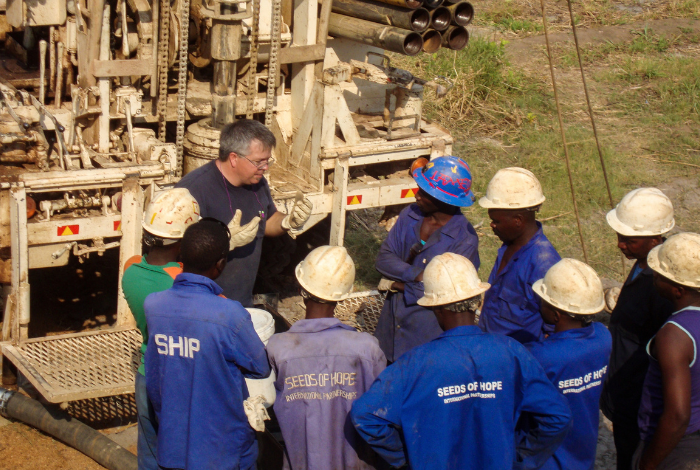
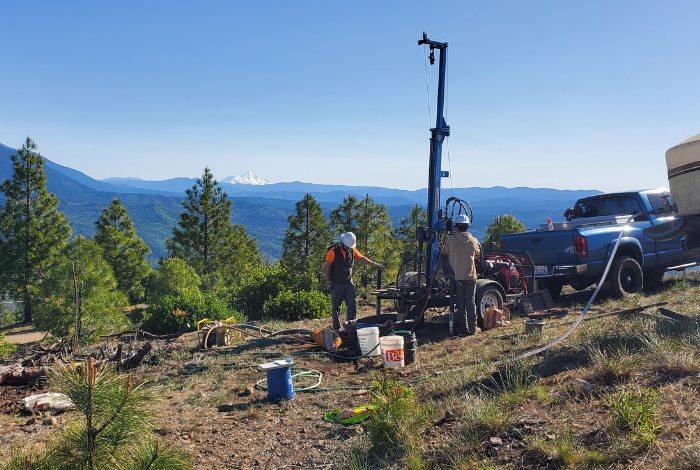
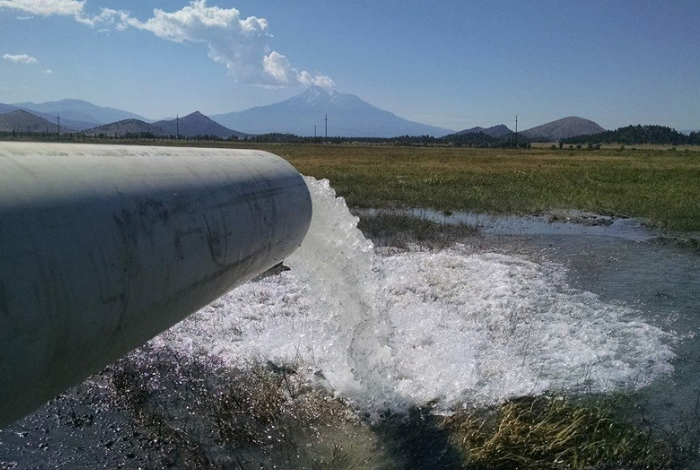
Images of some of our Drilling Projects


Benefits of Well drilling in Yreka
- Greater water independence: A private well gives rural Yreka property owners direct access to groundwater without depending entirely on a municipal water connection.
- Water designed around your property: Your well, pump and storage system can be planned around household use, livestock, gardens, ranch operations or agricultural requirements.
- Lower ongoing water costs: After the initial drilling and installation investment, you do not receive a monthly municipal water-usage bill. Electricity, testing and maintenance costs still apply.
- Reliable supply for rural development: A properly constructed well can make undeveloped land more practical for a new home, ranch, workshop or agricultural project.
- Long-term property value: A permitted, documented and productive water well can make a rural Yreka property more functional and attractive to future buyers.
Your questions answered
FAQ About Water Well Drilling in Yreka
What is the typical well depth around Yreka?
Groundwater data for the Yreka hydrologic subarea shows a domestic well median of approximately 150 feet and an average of about 178 feet. Yreka East domestic wells have a median of approximately 127 feet. Actual depths vary widely, and some recorded wells extend several hundred feet deeper.
Will my well be the same depth as my neighbour’s?
Not necessarily. Underground sediment layers and bedrock fractures can change over short distances. A neighbouring well provides useful evidence, but it cannot guarantee your well’s depth, production or water quality.
Do I need a county permit to drill near Yreka?
Yes. Siskiyou County generally requires a permit for new water wells and for certain alterations or destruction of existing wells. The proposed site must be reviewed for setbacks and compliance before construction begins.
Can a residential well also supply horses or a garden?
It may be able to, but those uses must be included in the original demand calculation. Well production, pump capacity, storage and the garden’s irrigation schedule should be evaluated together before the system is designed.
How should I prepare rural land for the drilling crew?
Provide a stable route with sufficient width, overhead clearance, load capacity and turning space. Identify buried utilities, mark the septic area, inspect gates and culverts, and remove low branches. We can discuss the required working area before mobilization.
Locations in California we Service
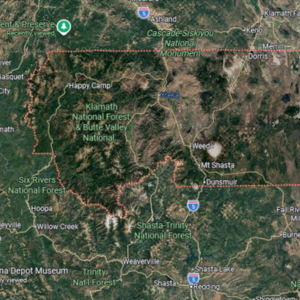
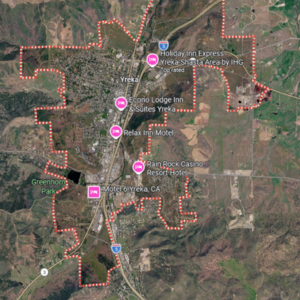
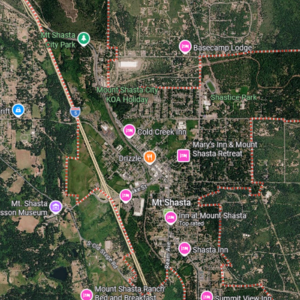
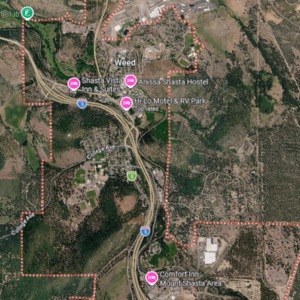
5 Interesting Facts about Yreka
- Yreka began as a Gold Rush boomtown. Gold was discovered near Black Gulch in March 1851. Within one month, approximately 2,000 miners had arrived in the area then known as Thompson’s Dry Diggings.
- The origin of the name “Yreka” remains disputed. One explanation connects it to a Shasta word meaning “north mountain” or “white mountain.” Mark Twain shared a more colourful story claiming the name came from the word “BAKERY”
- Yreka was once named the capital of a proposed new state. In November 1941, the city was selected as the capital of the proposed State of Jefferson, which would have included counties from Northern California and Southern Oregon.
- Yreka has preserved much of its early architecture. The city contains more than 70 homes built before 1900, along with historic Miner Street and a recognised historic district featuring architecture from before 1910.
- Yreka sits within the geologically diverse Shasta Valley. The surrounding area contains valley sediments, alluvial material and volcanic formations that influence how groundwater moves and why water-well depths can vary considerably between nearby properties.
Read Our Latest Blogs

How Deep Does a Water Well Need to Be?
If there is one question every homeowner asks before drilling a water well, it is, “How deep does it need to be in Southern Oregon?”

How Often Should a Private Residential Well Be Tested?
A private residential well should generally be tested every year for total coliform bacteria, E. coli, and nitrates. In Southern Oregon, the Oregon Health Authority
Can You Have a Well in an Urban Area?
Yes, you can have a water well in some urban areas, but approval depends on local regulations, your intended water use, groundwater conditions, and the
Get in Touch
For all your water well drilling and pump needs contact us today
Address
2301 S Mt Shasta Blv, Mt Shasta CA 96067
Enloedrillingandpumps@gmail.com
Call Us
541-841-4124