
Water Well Drilling in Lake Shastina, CA
Call us TODAy
✓ Call Your Local Well Drilling Experts
✓ Request a Free Drilling Quote
✓ Plan Your Well With Local Experience
✓ Start Your Water Well Project Today
Water Well Drilling
Developing a dependable water supply in Lake Shastina requires an understanding of volcanic rock, valley sediments, groundwater recharge and the property’s position within the surrounding water-service area. The community lies in the southern Shasta Valley, northeast of Weed and below Mount Shasta. Beneath the surface, layers of basalt, volcanic debris, sand, gravel, clay and older lake deposits can create very different drilling conditions from one parcel to another.
Enloe Drilling & Pumps provides professional water well drilling in Lake Shastina, CA for rural homeowners, ranchers, agricultural landowners and commercial property owners. Our multigenerational team considers nearby well records, local geology, property access and the amount of water you need before developing a practical drilling plan.
Many established properties within Lake Shastina receive water from the Lake Shastina Community Services District. Private well drilling may be relevant for properties beyond the district’s service area, parcels that cannot obtain a connection or approved projects with separate water requirements. Always confirm service availability and local restrictions before planning a private well.
Local Geology and Drilling Conditions in Lake Shastina
Lake Shastina is located where volcanic formations from Mount Shasta meet the sediment-filled Shasta Valley. This transition creates a complex underground environment. A drilling project may begin in loose soil and sediment before reaching hard volcanic rock, or it may remain within layers of sand, gravel, clay and volcanic fragments.
Basalt and Fractured Volcanic Formations
Mount Shasta’s volcanic history has had a major influence on the area. Basalt and other volcanic formations can contain fractures, cooling joints and permeable contacts between separate lava flows. These openings may store and transmit useful quantities of groundwater.
Volcanic rock does not produce water evenly. A borehole can pass through a thick section of dense basalt without encountering significant water and then reach a productive fracture farther down. The direction, size and connection of these fractures influence how much water enters the well.
Hard volcanic rock can also affect drilling time, equipment wear and the final construction plan. The presence of water in one nearby volcanic well does not mean the same fracture continues beneath the next property.
Alluvial and Valley-Fill Sediments
Parts of the Lake Shastina area contain sediments deposited by streams, erosion and earlier water systems within the valley. These deposits may include sand, gravel, silt, clay and volcanic fragments of different sizes.
Coarse sand and gravel can form productive groundwater zones when they are thick enough and connected to a reliable recharge source. Fine silt and clay generally transmit water more slowly. Loose formations may require careful casing and well-screen design to keep sediment out of the completed well.
Groundwater Recharge From Mount Shasta
Rain and snowmelt from Mount Shasta contribute to the regional groundwater system. Water can soak into porous volcanic material, travel through fractures and move toward the lower Shasta Valley. This process supports springs, streams and underground water-bearing formations.
Recharge does not immediately reach every well. Elevation, distance from the mountain, underground barriers, pumping activity and seasonal conditions all influence water levels. Lake Shastina’s dry summers also make long-term recovery more important than a short burst of water encountered during drilling.
Typical Water Well Depths in Lake Shastina
Nearby well completion reports are valuable when preparing a Lake Shastina drilling project. They can show recorded depths, construction details, water levels and reported production in the surrounding area. However, they do not guarantee the outcome of a new well.
Domestic wells in the broader Weed and southern Shasta Valley area cover a wide recorded range, from relatively shallow wells to wells reaching approximately 500 feet. Regional data indicates that many domestic wells are completed at depths of roughly 100 to 200 feet, with an average near 154 feet and a median close to 139 feet.
For practical planning, many Lake Shastina-area residential projects may initially consider a range of approximately 100 to 250 feet. Some properties may obtain a suitable supply at a shallower depth. Others may require drilling beyond 250 or 300 feet to reach a productive fracture, a deeper sediment layer or a more dependable water column.
These figures are planning references only. They are not promised drilling depths. The final depth depends on the formations, water entries, static water level and sustainable production found beneath the specific site.
Before recommending a drilling approach, we evaluate:
- Nearby California well completion reports
- Recorded well depths, static water levels and reported yields
- The parcel’s elevation and position within the Shasta Valley
- Known volcanic formations and valley-fill deposits
- Distance from the Lake Shastina reservoir and local drainage features
- Seasonal water-level changes and nearby groundwater use
- Required household, livestock or agricultural water volume
- Space for the wellhead, pump equipment and storage tanks
Finding the first water-bearing layer does not necessarily mean drilling should stop. The completed well should provide adequate available water, practical recovery and suitable conditions for the intended pumping system.
Residential and Agricultural Water Requirements
Residential Water Wells in Lake Shastina
A household water system must meet both daily consumption and short periods of high demand. Showers, toilets, laundry, dishwashers, outdoor faucets and landscaping may all require water within the same hour.
The well’s sustainable production should determine the pump and storage design. Installing a pump that removes water faster than the well can recover may lead to low-pressure problems, pump cycling or temporary loss of supply.
A moderate-producing well can sometimes support a home when it is combined with an appropriately sized storage tank. The well fills the tank gradually, and a separate pressure system supplies the property when several fixtures are used at once.
Benefits of a properly designed residential well system include:
- A private water source for qualifying rural properties
- A pump matched to the well’s measured performance
- Storage options for properties with moderate well recovery
- Planning for household, landscaping and limited livestock use
- Improved control over system servicing and maintenance
- Documented construction information for future property owners
- Equipment protection for freezing Lake Shastina winters
Before drilling, property owners should confirm whether Lake Shastina Community Services District water is available or required. A parcel located within or near the district may be subject to connection rules that affect whether a new private well is appropriate.
Livestock, Ranch and Agricultural Wells
Properties beyond the developed community may require water for horses, cattle, gardens, orchards, greenhouses or pasture. These uses can place a much larger seasonal demand on a well than ordinary household consumption.
Livestock demand depends on the number and type of animals, summer temperatures and how water is distributed across the property. Irrigation planning must consider the planted area, crop requirements, soil conditions and number of pumping hours available each day.
A high instantaneous flow rate is not always necessary when sufficient storage is available. Water can be pumped steadily into a storage tank and distributed when needed. Larger irrigation projects, however, may require sustained production that cannot be replaced by storage alone.
Groundwater in the Shasta Valley is managed under California’s Sustainable Groundwater Management Act and the local Groundwater Sustainability Plan. A well construction permit does not automatically authorise unlimited pumping or guarantee that every proposed agricultural use will be approved.
Access Considerations for Lake Shastina Properties
Lake Shastina contains established residential roads as well as outlying parcels reached by gravel drives and rural tracks. A drilling rig, support truck and casing delivery vehicle require more width, height and turning space than a passenger vehicle.
Access conditions can also change throughout the year. Winter snow and ice may make sloped driveways unsafe, while spring thaw can soften unpaved roads. Dry summer conditions bring wildfire restrictions, dust and increased fire-safety concerns.
Before equipment is mobilised, we evaluate:
- Driveway width, grade and load-bearing condition
- Gate openings and sharp turns near the property entrance
- Overhead power lines, branches and communication cables
- Culvert, cattle-guard and private bridge capacities
- Snowbanks, ice, mud and seasonal access limitations
- Wildfire clearance around the proposed work area
- Space for the rig, support vehicles, casing and drilling materials
- Safe placement away from septic and contamination sources
- Long-term access for pump removal and well maintenance
A level work area may need to be cleared and compacted before drilling begins. If the site cannot safely support heavy equipment, grading or road improvements should be completed before the crew arrives.
Future access is just as important as initial access. Avoid placing buildings, permanent fencing, landscaping or overhead structures where they could prevent a service vehicle from reaching the wellhead.
California Well Permits and Construction Requirements
Siskiyou County Environmental Health administers water well permits in the Lake Shastina area. A permit is generally required before constructing a new well or deepening, altering, repairing or properly destroying an existing well.
Before applying, determine whether the property is served by the Lake Shastina Community Services District. Established district water and sewer services may affect whether a private well can be approved and how the proposed water source may be used.
The well location must comply with current separation requirements. County review may consider septic tanks, disposal fields, sewer lines, drainage areas, livestock enclosures, fuel storage, property boundaries and other potential contamination sources.
Construction must follow applicable California Water Well Standards and Siskiyou County requirements. These rules address casing materials, sanitary seals, annular space, wellhead protection, surface drainage and the prevention of contaminated water moving between underground formations.
Water well work must be performed by a contractor holding the appropriate California licence. The county may also require advance notice before the annular seal is placed so an inspection can be arranged.
The usual project process includes:
- Confirming district water availability and private-well eligibility
- Defining the property’s intended water use
- Reviewing nearby well records and local groundwater information
- Selecting a location that satisfies required setbacks
- Submitting the Siskiyou County well permit application
- Preparing the access road and drilling area
- Drilling, casing and sealing the well
- Developing and testing the completed well
- Selecting the pump, pressure system and storage equipment
- Submitting the required well completion documentation
Well application procedures, fees and inspection requirements can change. Property owners should verify current information with Siskiyou County Environmental Health and the Lake Shastina Community Services District before committing to construction.
Communities We Serve Near Lake Shastina
Our Lake Shastina water well drilling service includes qualifying rural properties in and around:
- Lake Shastina
- Big Springs
- Juniper Valley
- Carrick
- Edgewood
- Weed
- Gazelle
- Grenada
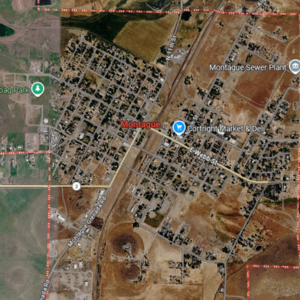
- Montague
- Rural properties along Highway 97
- Outlying parcels in the southern Shasta Valley
Illustrative Lake Shastina Water Well Drilling Scenario
The following example explains how a typical Lake Shastina-area project might be planned. It is an illustrative scenario and is not represented as a completed Enloe customer project.
Imagine a couple purchasing an undeveloped rural parcel northeast of the established Lake Shastina community. Their plans include a three-bedroom home, a workshop, four horses and a drought-tolerant garden. The parcel is outside the practical reach of the existing community water system, so they begin investigating a private well.
The first step would be to confirm water-service status and well eligibility with the appropriate local agencies. We would then review nearby completion reports, estimate household and livestock demand and evaluate potential drilling locations.
The preferred site would need to satisfy septic setbacks while remaining accessible to the drilling rig. Because the driveway crosses a shallow culvert and ends in a small turnaround, access improvements might be required before mobilisation.
Suppose the completed well produced enough water for daily use but recovered more slowly than the family’s combined morning and evening demand. Instead of installing an oversized pump, the system could use a storage tank that fills at a controlled rate. A separate pressure pump could then supply the house and livestock troughs during peak periods.
This approach would protect the well from excessive pumping while giving the family practical water capacity. It also demonstrates why depth is only one part of a successful project. Sustainable production, storage, pump selection, frost protection and future service access all contribute to reliability.
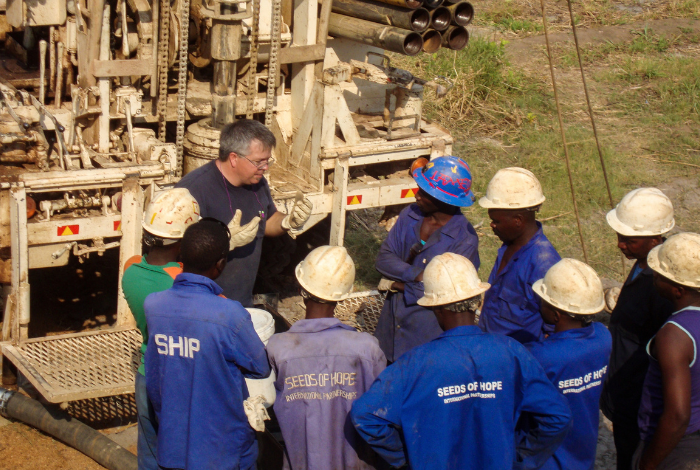
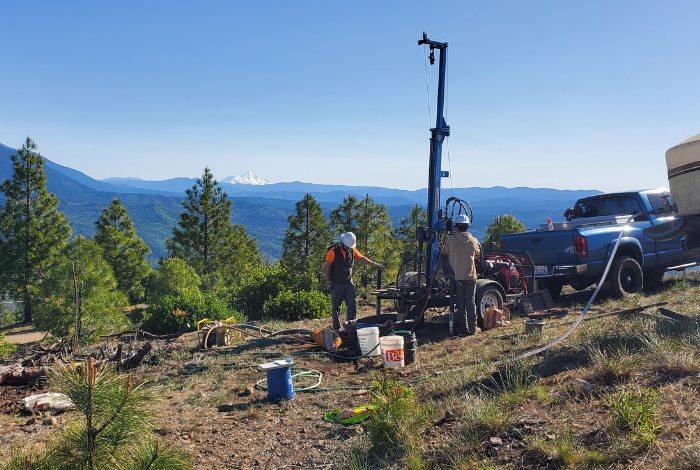
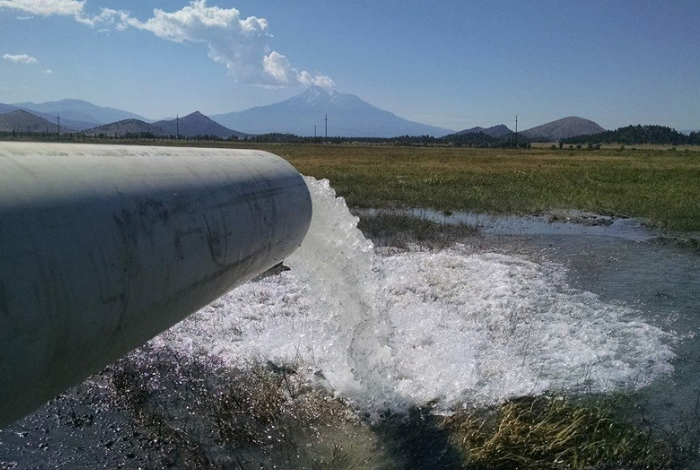
Images of some of our Drilling Projects


Benefits of Well drilling in Lake Shastina, CA
A water well is a major property investment. Decisions made during siting, construction and equipment selection can affect water reliability, water quality and maintenance costs for many years.
Choosing Enloe Drilling & Pumps offers several advantages:
- Multigenerational water well drilling experience
- Knowledge of Siskiyou County’s volcanic and valley formations
- Planning informed by nearby well completion reports
- Residential, ranch, agricultural and commercial capabilities
- Well drilling, production testing and pump services
- Storage solutions for moderate-producing wells
- Practical preparation for snow, wildfire and rural access
- Clear explanations of drilling risks and measured results
We do not guarantee a specific drilling depth, flow rate or water quality before the well is completed. Instead, we use available local information to establish reasonable expectations and adapt the construction plan to the conditions encountered underground.
Your questions answered
FAQ About Water Well Drilling in Lake Shastina
What is the typical water well depth near Lake Shastina?
Many domestic wells in the broader Weed and southern Shasta Valley area are completed at approximately 100 to 200 feet. Regional records include both much shallower wells and wells approaching 500 feet. A Lake Shastina property may require drilling beyond 200 or 300 feet depending on the volcanic fractures, sediment layers and groundwater conditions encountered.
Can I drill a private well if my property is within Lake Shastina?
Not every property will require or qualify for a private well. Much of the established community receives groundwater from Lake Shastina Community Services District wells and storage tanks. Confirm district service availability, connection requirements and county approval before arranging private drilling.
Does being close to the lake mean groundwater will be shallow?
No. The reservoir’s surface level does not determine the depth or production of a private well. Groundwater moves through underground sediments and volcanic formations. The parcel’s elevation, geology and connection to water-bearing zones are more important than its visible distance from the lake.
Can one well provide water for a home and several horses?
Possibly. The decision depends on the well’s tested production, recovery rate, daily household demand and number of animals. Storage can help balance periods of high use when the well produces water steadily but cannot meet the entire peak demand immediately.
How should I prepare a Lake Shastina property for drilling?
Provide a stable road and level work area with adequate width, overhead clearance and turning space. Mark utilities, septic components and property boundaries. Check gates and culverts, remove low branches and inform the drilling company about snow, mud, steep grades or wildfire-related access concerns.
Locations in California we Service
5 Interesting Facts About Lake Shastina, CA
- Lake Shastina is a reservoir, not a natural lake. It was created by Dwinnell Dam on the Shasta River to store water for agricultural irrigation throughout the Shasta Valley.
- The community began as a holiday destination. Development started in 1968 as a second-home and recreation area before Lake Shastina grew into a permanent community for families and retirees.
- Local drinking water comes from underground. The Lake Shastina Community Services District pumps groundwater from wells into storage tanks positioned throughout the community.
- Some neighborhoods need booster pumps. Lake Shastina’s changing elevation means the water system uses booster pumps to maintain service in higher parts of the community.
- Volcanic geology shapes the surrounding groundwater system. The area lies in the Shasta Valley near Mount Shasta, where groundwater can move through volcanic rock, sediment-based aquifers and fractures below the surface.
Read Our Latest Blogs

How Much Does It Cost to Drill a Water Well in Southern Oregon?
If you’re planning to drill a water well, one of the first questions you’ll ask is, “How much is this going to cost?” It’s a

What Are the Signs That a Well Pump Is Failing and Needs to Be Replaced?
A failing well pump rarely stops working without warning. In most cases, the system gives you several clues first. You may notice fluctuating water pressure,

How Often Should a Private Residential Well Be Tested?
A private residential well should generally be tested every year for total coliform bacteria, E. coli, and nitrates. In Southern Oregon, the Oregon Health Authority
Get in Touch
For all your water well drilling and pump needs contact us today
Address
2301 S Mt Shasta Blv, Mt Shasta CA 96067
Enloedrillingandpumps@gmail.com
Call Us
541-841-4124